
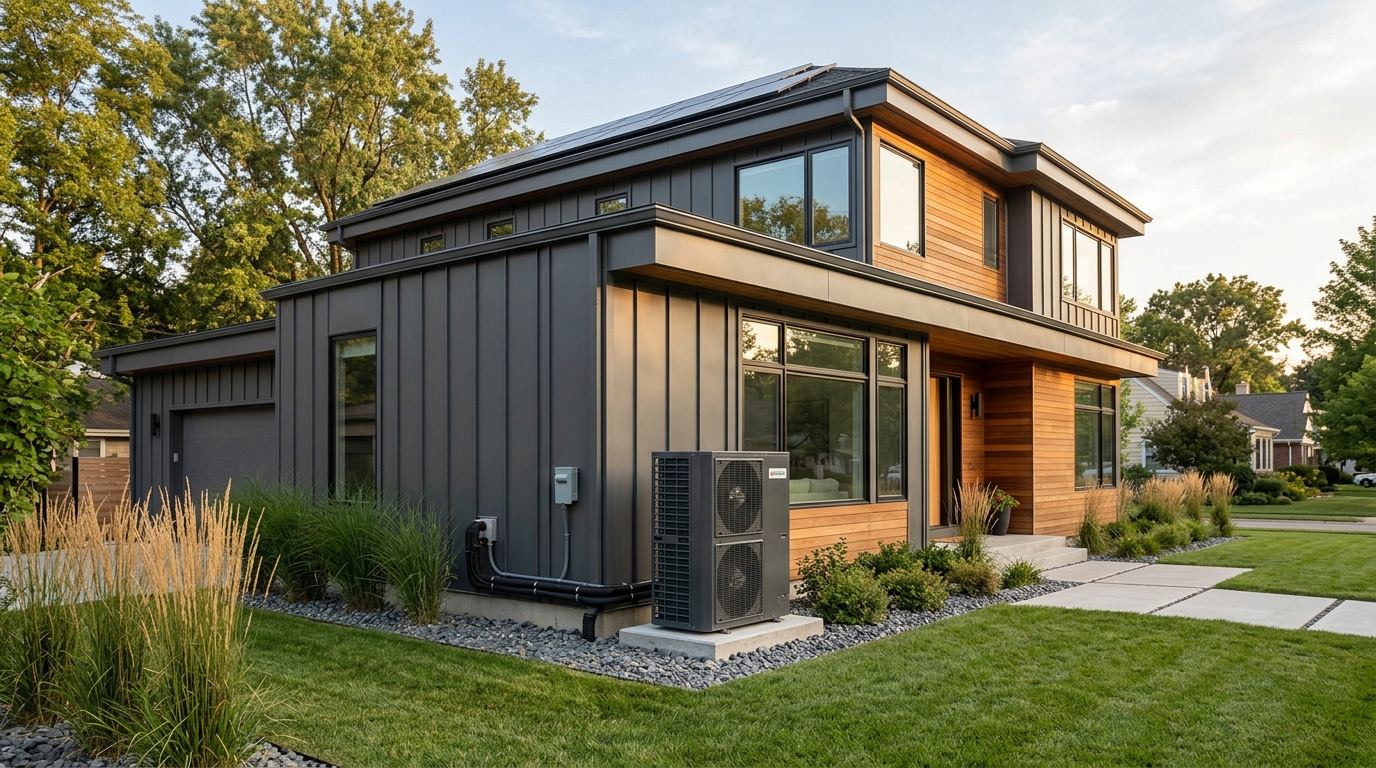
Heating and cooling upgrades represent one of the largest home improvement investments many homeowners make. Fortunately, rebates, utility incentives, financing programs, and—in some situations—tax benefits can help reduce the overall cost of installing a modern heat pump.
It’s important to understand, however, that available incentives change over time. Federal tax laws, state programs, utility rebates, and manufacturer promotions are updated regularly. As of 2026, several federal clean energy tax credits that previously applied to residential heat pumps have been reduced or eliminated under recent federal legislation, making it especially important to verify current eligibility before beginning a project.
For Michigan homeowners, the best savings opportunities often come from combining available utility rebates, manufacturer promotions, financing programs, and high-efficiency equipment rather than relying on a single incentive.
Many homeowners begin by researching professional heat pump installation services to understand equipment options and identify incentives that may apply to their specific project.
Quick Answer
Michigan homeowners may be able to reduce the cost of a new heat pump through utility rebates, manufacturer promotions, financing programs, and selected state or income-qualified energy programs. Because rebate and tax credit programs frequently change, homeowners should verify current eligibility before purchasing equipment.
Key Takeaways
- Heat pump incentives change frequently.
- Utility rebates vary by provider.
- Financing programs can reduce upfront costs.
- High-efficiency equipment may qualify for additional incentives.
- Manufacturer promotions may provide seasonal savings.
- Program eligibility depends on location and equipment.
- Professional contractors often help identify available rebates.
- Always verify current tax rules before making purchasing decisions.
Why Incentives Matter
Installing a high-efficiency heat pump can significantly reduce long-term heating and cooling costs, but the initial investment is often higher than replacing a conventional furnace or air conditioner.
Financial incentives help homeowners by:
- Lowering upfront costs
- Improving return on investment
- Encouraging energy-efficient upgrades
- Making modern HVAC technology more accessible
Although available programs vary, combining multiple incentives may substantially reduce total project costs.
Types of Heat Pump Incentives
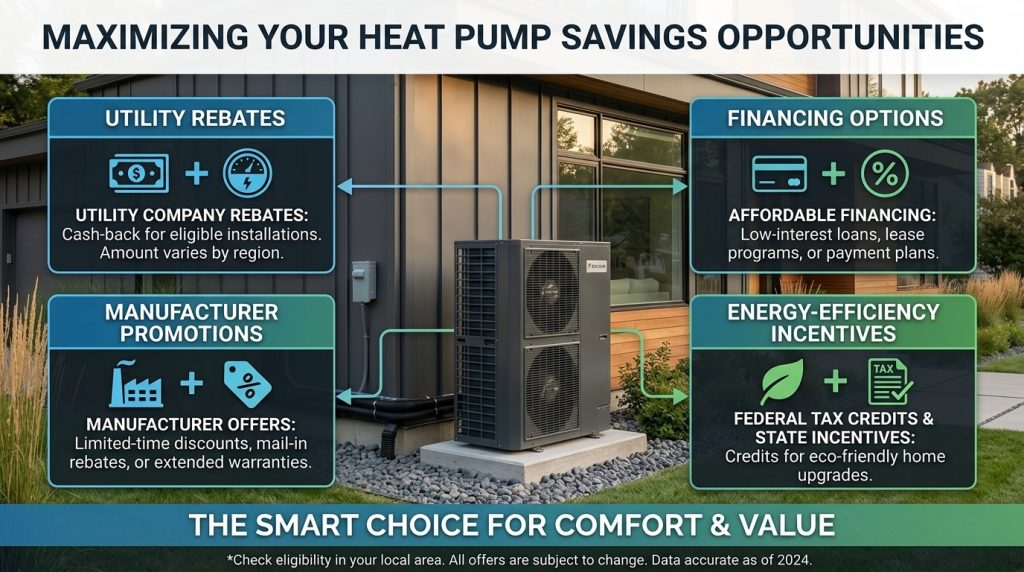
Several different types of financial assistance may be available depending on the homeowner’s circumstances.
These commonly include:
- Utility rebates
- Manufacturer promotions
- Low-interest financing
- State energy programs
- Income-qualified rebate programs
Because each program has unique requirements, homeowners should carefully review eligibility before purchasing equipment.
Utility Rebates
Many electric and natural gas utilities periodically offer rebates for installing qualifying high-efficiency HVAC equipment.
Programs may encourage homeowners to upgrade to:
- Cold-climate heat pumps
- Variable-speed systems
- High-efficiency HVAC equipment
- Smart thermostats
- Whole-home efficiency improvements
Rebate amounts vary based on:
- Utility provider
- Equipment efficiency
- Program funding
- Installation requirements
Homeowners should always confirm available rebates directly with their local utility before installation.
Manufacturer Promotions
HVAC manufacturers frequently offer limited-time promotional incentives.
Examples may include:
- Instant discounts
- Seasonal rebates
- Extended warranties
- Low-interest financing
- Package promotions
Because these promotions change throughout the year, homeowners should ask participating HVAC contractors about current offers when comparing equipment.
Financing Can Reduce Upfront Costs
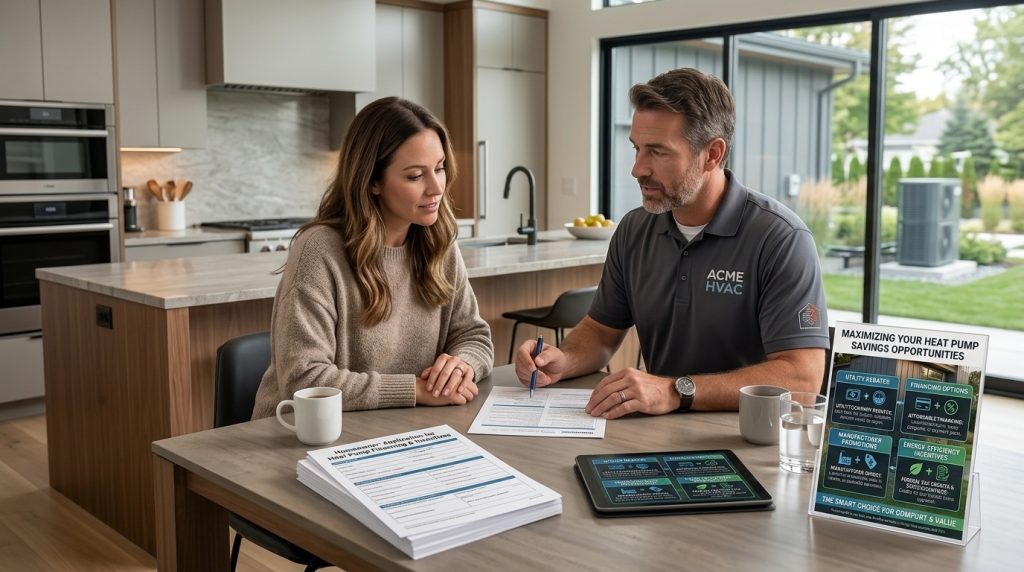
For homeowners who prefer to spread project costs over time, financing may provide greater flexibility than delaying equipment replacement.
Many HVAC contractors offer specialized heat pump financing options that allow qualified homeowners to install new equipment while making manageable monthly payments.
Financing may be particularly attractive when:
- Existing equipment fails unexpectedly.
- Emergency replacement is necessary.
- Energy savings offset a portion of monthly payments.
- Homeowners want higher-efficiency equipment than their immediate budget allows.
Choosing High-Efficiency Equipment
Many incentive programs focus specifically on equipment that meets higher efficiency standards.
Installing energy efficient HVAC systems may provide benefits such as:
- Lower operating costs
- Reduced energy consumption
- Improved indoor comfort
- Better humidity control
- Longer-term utility savings
The U.S. Environmental Protection Agency continues to recognize ENERGY STAR® certified heat pumps as among the most energy-efficient residential HVAC options available. ENERGY STAR certified heat pumps.
Understanding Federal Tax Credit Changes
Federal tax incentives for residential energy improvements have changed substantially in recent years.
Programs that were previously available under earlier clean-energy legislation have been modified or phased out under more recent federal law. As a result, homeowners should not assume that incentives available in prior years remain available today.
Before purchasing equipment, homeowners should:
- Verify current federal tax rules.
- Review state incentive programs.
- Confirm local utility rebates.
- Consult qualified tax professionals when appropriate.
Obtaining current information before installation helps avoid misunderstandings about available financial incentives.
Can Rebates and Financing Be Combined?
In many cases, homeowners may be able to combine multiple types of financial assistance when purchasing a new heat pump.
Depending on program requirements, potential combinations may include:
- Utility rebates
- Manufacturer promotions
- Contractor financing
- Income-qualified energy programs
However, each program has its own eligibility rules, documentation requirements, and deadlines. Some rebates may affect the amount eligible for financing or other incentives, so homeowners should carefully review program terms before making a purchase.
For many Michigan homeowners, combining available savings opportunities can make a high-efficiency HVAC upgrade more affordable.
How to Improve Your Chances of Qualifying
Many rebate and financing programs require homeowners to meet specific equipment and installation criteria.
Common qualification requirements include:
- Installing qualifying high-efficiency equipment
- Using approved or licensed contractors
- Meeting minimum efficiency ratings
- Completing required documentation
- Applying within program deadlines
- Following manufacturer installation guidelines
Some utility programs also require equipment to appear on approved product lists before rebates can be issued.
Working with experienced HVAC professionals can help homeowners understand which documentation may be needed during the application process.
Common Mistakes to Avoid
Because rebate programs change regularly, homeowners should avoid making assumptions based on older information.
Some common mistakes include:
- Assuming last year’s rebates are still available
- Purchasing equipment before confirming eligibility
- Missing application deadlines
- Failing to retain receipts and documentation
- Installing equipment that does not meet program requirements
- Overlooking utility-specific rebate opportunities
Taking time to verify current program requirements before installation may help maximize available savings. Recent federal policy changes have also altered or eliminated several previous tax incentives, making current verification especially important.
Choosing the Right HVAC Contractor
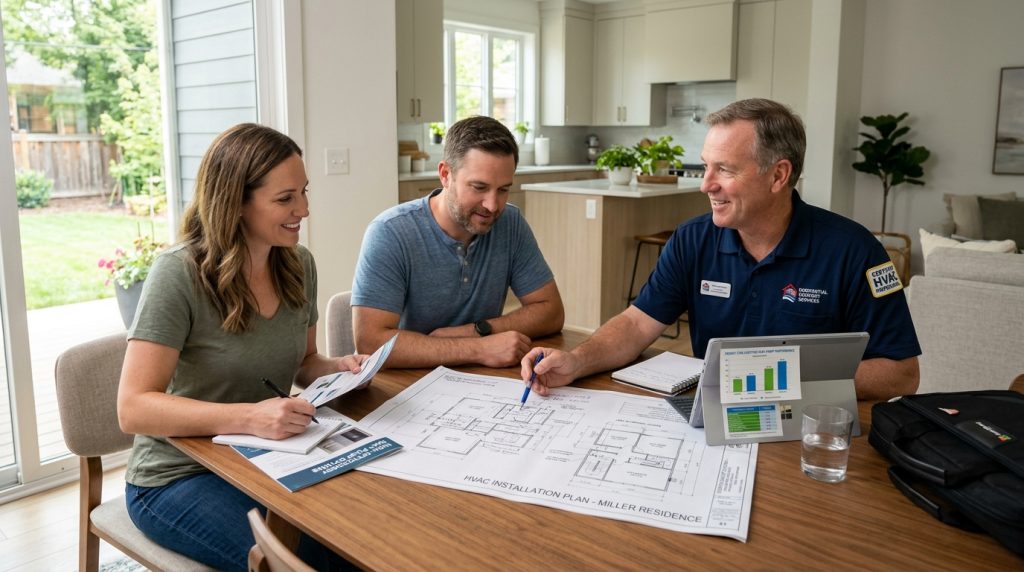
A knowledgeable HVAC contractor can often help homeowners navigate available financing and incentive opportunities while recommending equipment that meets applicable efficiency requirements.
When comparing contractors for a heat pump installation, homeowners may wish to evaluate:
- Experience with high-efficiency heat pumps
- Knowledge of available rebate programs
- Financing options
- Equipment recommendations
- Licensing and certifications
- Installation quality
- Ongoing maintenance services
Many homeowners also review public business profiles to better understand customer experiences, professionalism, and overall service quality before selecting an HVAC company.
Looking Beyond Initial Cost
While rebates and financing can help reduce upfront expenses, homeowners should also evaluate long-term operating costs.
High-efficiency heat pumps may provide benefits such as:
- Lower monthly utility bills
- Reduced energy consumption
- Improved indoor comfort
- Better humidity control
- Longer equipment life when properly maintained
According to the U.S. Department of Energy, properly selected and installed heat pumps can provide highly efficient heating and cooling by transferring heat rather than generating it through combustion. This efficiency can contribute to lower long-term operating costs for many homes.
Conclusion
Heat pump rebates, financing programs, and energy-efficiency incentives can make upgrading an HVAC system more affordable for many Michigan homeowners. However, available programs continue to evolve, making it essential to verify current eligibility before purchasing equipment.
Rather than relying solely on federal tax credits, homeowners should explore utility rebates, manufacturer promotions, contractor financing, and other state or income-qualified programs that may provide meaningful savings.
Selecting high-efficiency equipment, working with experienced HVAC professionals, and understanding available financial assistance can help maximize both short-term savings and long-term energy efficiency. Careful planning before installation often results in the greatest overall value while supporting year-round comfort and lower operating costs.
Frequently Asked Questions
Are there still heat pump rebates available in Michigan?
Yes. Many Michigan homeowners may qualify for utility rebates, manufacturer promotions, financing programs, or income-qualified energy assistance. However, available programs vary by utility provider, location, and equipment, so current eligibility should always be verified before purchasing a new system.
Can I claim a federal tax credit for installing a heat pump?
Federal tax incentives have changed in recent years, and eligibility may vary depending on current legislation and the installation date. Homeowners should verify the latest IRS guidance or consult a qualified tax professional before expecting a federal tax credit.
Do utility companies offer heat pump rebates?
Many utility providers periodically offer rebates for qualifying high-efficiency HVAC equipment. Program availability, rebate amounts, and qualifying products vary by utility company.
Can rebates and financing be combined?
Often, yes. Depending on program rules, homeowners may combine utility rebates, manufacturer promotions, and qualified heat pump financing options. Each program has its own requirements, so reviewing the terms is important.
Does financing make heat pump installation more affordable?
Financing can spread installation costs over manageable monthly payments, allowing homeowners to upgrade to more efficient equipment without paying the entire cost upfront.
What types of heat pumps usually qualify for rebates?
Many incentive programs focus on high-efficiency equipment that meets specific performance standards. Program requirements differ, so homeowners should verify that their selected equipment qualifies before installation.
Do I need to use a professional installer?
In many cases, yes. Numerous rebate and financing programs require installation by licensed HVAC professionals. Professional heat pump installation also helps ensure proper system sizing, efficiency, and warranty compliance.
What documents are usually required for rebate applications?
Programs commonly request:
- Purchase receipts
- Installation invoices
- Equipment model numbers
- Proof of installation
- Rebate application forms
Requirements vary depending on the program.
How can energy-efficient HVAC systems reduce long-term costs?
Modern energy efficient HVAC systems often consume less energy while providing improved comfort. Lower operating costs over time may offset part of the initial investment.
How long do rebate programs remain available?
Some rebate programs operate year-round, while others are seasonal or remain available only until funding is exhausted. Homeowners should confirm program deadlines before beginning an installation project.
Should I wait for better rebates before replacing my HVAC system?
Not necessarily. Waiting may increase the risk of unexpected equipment failure, especially if an older system is nearing the end of its service life. Evaluating available incentives alongside current system conditions often leads to a better decision.
Why should homeowners verify incentive information before purchasing?
Rebate programs, financing offers, and tax policies change regularly. Confirming eligibility before purchasing equipment helps avoid disappointment and ensures homeowners understand which financial benefits are actually available.