
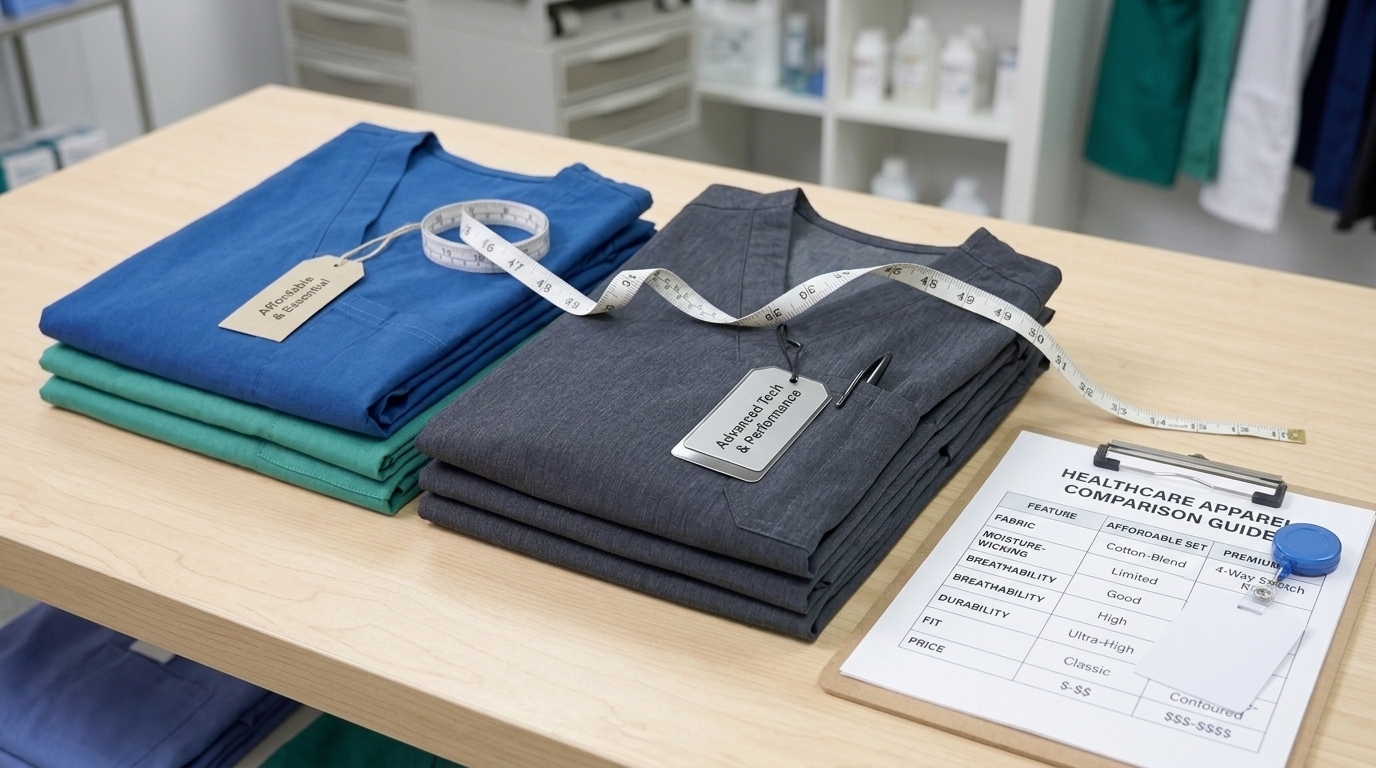
Medical scrubs are daily workwear for many healthcare professionals, so the difference between affordable and premium options matters. The best choice is not always the cheapest set or the most expensive one. A good scrub purchase depends on fit, fabric, durability, pocket layout, laundering needs, shift length, and workplace requirements.
Affordable scrubs can work well for students, part-time workers, backup uniforms, or budget-conscious buyers. Premium scrubs may make more sense for full-time healthcare workers who need better stretch, shape retention, wrinkle resistance, and long-shift comfort. The right decision comes down to value, not price alone.
Quick Answer
Affordable medical scrubs are best when the buyer needs basic, practical uniforms at a lower cost. Premium scrubs are often better for long shifts, repeated laundering, better stretch, improved fabric feel, stronger pocket design, and longer-term wear.
Healthcare workers comparing affordable medical scrubs should look beyond the price tag. A scrub set should fit well, move comfortably, meet workplace rules, and stay presentable after washing. Premium options may cost more upfront, but they can offer better value if they last longer and feel better during frequent use.
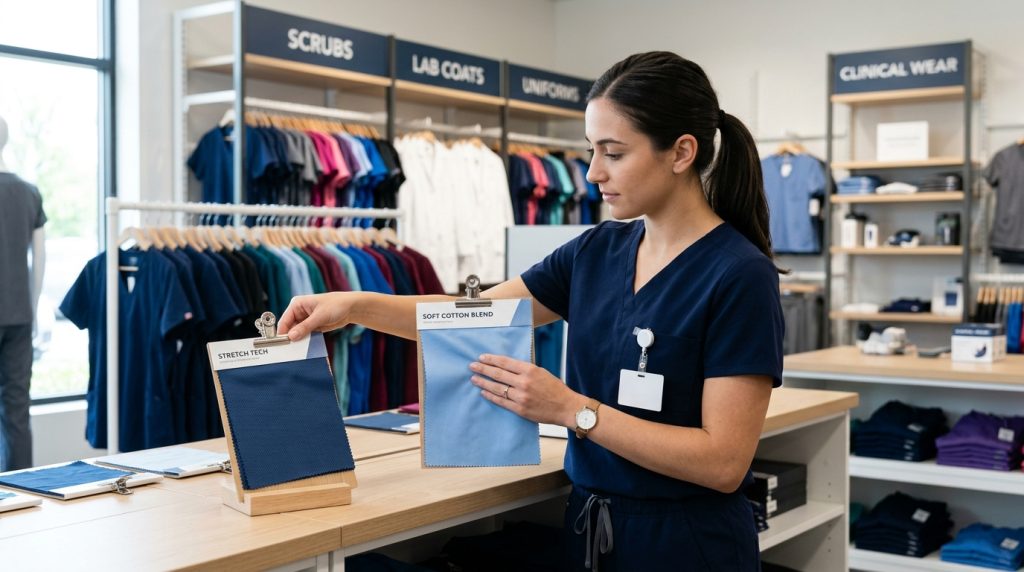
What Makes Medical Scrubs Affordable or Premium?
The difference between affordable and premium scrubs usually comes from fabric quality, construction, fit, stretch, design details, and long-term durability. Both types can be useful, but they are built for different expectations.
Affordable scrubs often focus on basic function. They provide the required uniform look, standard pockets, simple fabrics, and accessible pricing. Premium scrubs usually add performance fabrics, softer hand feel, modern fits, improved stitching, more refined waistbands, better shape retention, and more thoughtful storage.
A higher price does not automatically mean a scrub set is better for every worker. A lower price does not automatically mean poor quality either. The best choice depends on how often the scrubs are worn and what the workday demands.
When Affordable Medical Scrubs Make Sense
Affordable scrubs can be the practical choice in many situations. Not every healthcare worker needs high-performance scrubs for every shift.
Students and New Healthcare Workers
Students often need scrubs that meet program requirements without creating unnecessary expense. Clinical rotations may require specific colors, basic cuts, or lab coat compatibility. In this case, affordable scrubs can be a sensible starting point.
New healthcare workers may also prefer affordable options until they learn what fit, fabric, and pocket layout they actually like. Buying several premium sets before knowing a preferred style can lead to wasted money.
Backup Uniforms
Many workers keep backup scrubs in a locker, car, or bag. Backup sets do not always need the same premium features as daily-use uniforms. A basic scrub set can be useful for unexpected spills, schedule changes, or emergency coverage.
Part-Time or Occasional Use
A part-time worker may not need the same fabric durability as someone wearing scrubs five days a week. If scrubs are worn only occasionally, an affordable set may provide enough comfort and value.
Budget-Conscious Buying
For workers buying multiple sets at once, affordability matters. A lower-cost scrub can help build a complete work wardrobe without overspending. The key is to avoid choosing price so aggressively that comfort and fit suffer.
When Premium Scrubs May Be Worth It
Premium scrubs are usually worth considering when scrubs are worn frequently, washed often, and expected to support long shifts.

Long Shift Comfort
Healthcare work can involve standing, walking, bending, lifting, reaching, sitting, and charting across long hours. A slightly better waistband, softer fabric, or more flexible fit can become very noticeable during a full shift.
Workers who prioritize comfortable medical scrubs should compare fabric feel, stretch recovery, pant rise, shoulder mobility, and pocket placement before buying.
Better Stretch and Recovery
Premium scrubs often use stretch fabrics designed to move with the body. Stretch is helpful, but recovery is equally important. Recovery means the garment returns to shape after movement instead of becoming baggy or loose.
This matters for workers who move constantly. Scrubs that lose shape during the day can feel less comfortable and look less professional.
Improved Fabric Feel
Premium scrub fabrics may feel softer, smoother, lighter, or more flexible. Some are designed to feel breathable while still holding structure. This can be useful for workers who dislike stiff fabric or experience irritation from rough seams.
Stronger Construction
Premium scrubs may include stronger seams, better stitching, reinforced stress points, smoother zippers, improved drawstrings, or more secure pocket construction. These details can affect how the scrub set performs after repeated wear and washing.
Professional Appearance
Some healthcare workers need scrubs that look polished in patient-facing settings. Premium scrubs may drape better, wrinkle less, and hold color more consistently. This can matter for doctors, providers, clinic staff, managers, and front-facing healthcare roles.
Fabric Differences That Affect Value
Fabric is one of the biggest reasons scrubs feel affordable or premium. It affects comfort, movement, breathability, laundering, and durability.
Polyester Blends
Polyester is common in medical scrubs because it can support durability, color retention, and wrinkle resistance. It is often used in both affordable and premium scrubs, but premium blends may feel softer or include more advanced finishing.
Rayon Blends
Rayon can add softness and drape. Scrubs with rayon may feel smoother and more fluid. This can make the garment feel more comfortable during long shifts, although care instructions should always be reviewed.
Spandex or Stretch Fibers
Spandex helps scrubs stretch and recover. It is common in performance-oriented scrubs. For workers comparing performance scrubs, stretch, recovery, breathability, and fabric weight are important details to evaluate.
Cotton Blends
Cotton blends can feel familiar and breathable, but they may wrinkle or shrink depending on the blend and care routine. Some workers prefer cotton-like softness, while others prefer synthetic blends for easier maintenance.
Fit: Why Price Does Not Matter If the Scrubs Do Not Fit
Fit can make an affordable scrub feel excellent or a premium scrub feel disappointing. The best fabric and design details will not matter if the top pulls at the shoulders or the pants sit awkwardly at the waist.
Scrub Top Fit
A scrub top should allow comfortable movement without pulling across the chest, shoulders, upper back, or arms. It should be long enough to provide coverage when bending or reaching but not so long that it feels bulky.
Check:
- Shoulder movement
- Sleeve comfort
- Neckline coverage
- Top length
- Pocket placement
- Side vents
- Fit when sitting and bending
Scrub Pant Fit
Scrub pants should be tested for waist comfort, rise, inseam, thigh room, and movement through the knees. A pant that looks fine while standing may feel restrictive when walking quickly or sitting for charting.
Check:
- Waistband security
- Rise height
- Inseam length
- Thigh and hip mobility
- Knee movement
- Pocket access
- Jogger cuff comfort, if applicable
Petite, Tall, and Regular Lengths
Length-specific sizing can make a major difference. If pants are too long, they may drag or bunch. If they are too short, they may feel awkward when sitting or walking. Petite, regular, and tall options help improve comfort and appearance.
Durability and Cost Per Wear
The true cost of scrubs is not only the purchase price. Cost per wear is often a better way to compare value.
For example, a lower-cost scrub set may be cheaper upfront but may fade, shrink, wrinkle, or lose shape sooner. A premium set may cost more but provide better value if it lasts longer and remains comfortable after many washes.
When judging cost per wear, consider:
- How often the scrubs will be worn
- How often they will be washed
- Whether the fabric fades quickly
- Whether seams hold up
- Whether the waistband stretches out
- Whether the scrub still looks professional after repeated use
- Whether replacement pieces are easy to find
For a full-time worker, premium scrubs can sometimes be more economical over time. For occasional wear, affordable scrubs may provide better value.
Pocket Design and Daily Function
Pocket design is one of the most practical differences between basic and premium scrubs. More pockets are not always better. The question is whether the pockets match the worker’s role.
Nurses, technicians, veterinary staff, dental professionals, and students may need more storage. Doctors and providers may prefer cleaner lines and fewer bulky pockets.
Useful pocket features may include:
- Chest pockets
- Cargo pockets
- Side-entry pockets
- Zipper pockets
- Pen slots
- Badge loops
- Interior pockets
- Phone pockets
Premium scrubs may offer more thoughtful pocket placement, but affordable scrubs can still work well if the layout matches the job.
Laundering and Maintenance
Scrubs need frequent cleaning, so laundering should be considered before buying. The CDC provides guidance on healthcare laundry and bedding, including handling and cleaning considerations for healthcare textiles. Workers should also follow employer policies and garment care labels.
Before buying scrubs, review:
- Wash temperature instructions
- Drying recommendations
- Bleach limitations
- Ironing guidance
- Colorfastness
- Special fabric care
- Employer laundering rules
A scrub set that requires complicated care may not be practical for daily clinical use. Easy-care fabrics can save time and help uniforms stay presentable.
Are Premium Scrubs More Protective?
Premium scrubs may offer better comfort or durability, but they should not be confused with personal protective equipment. OSHA explains that personal protective equipment is used to reduce exposure to hazards that can cause workplace injuries and illnesses.
Scrubs are usually professional workwear. They may be worn under PPE, but they are not a substitute for gloves, gowns, masks, eye protection, respirators, or other required protective equipment. Healthcare workers should follow workplace policies for PPE and infection control.
Affordable vs Premium Scrubs by Role
Different roles may benefit from different price points.
Nurses
Nurses often benefit from scrubs with stretch, practical pockets, breathable fabric, and secure waistbands. Premium scrubs may be worth it for nurses working long shifts or physically active roles. Affordable scrubs may still work well for backup sets or shorter shifts.
Doctors and Providers
Doctors, physician assistants, nurse practitioners, and clinical providers may prioritize clean fit, professional appearance, and lab coat compatibility. Premium scrubs can be useful when appearance and shape retention are important.
Medical Students
Students often need budget-friendly options that meet school requirements. Affordable scrubs may make sense at the start, especially when the student is still learning personal fit preferences.
Dental and Veterinary Teams
Dental and veterinary workers may need easy-care fabrics, flexible movement, and durable construction. Depending on how often the scrubs are worn and washed, either affordable or premium options may work.
Healthcare Groups
Group uniform buyers should balance budget, size range, availability, embroidery needs, and reorder consistency. Premium scrubs may improve team presentation, while affordable scrubs can help control costs across larger groups.
How to Compare Scrubs Before Buying
A smart comparison should include more than price.
Use This Checklist
Before choosing between affordable and premium scrubs, compare:
- Fabric blend
- Stretch and recovery
- Fit through shoulders and hips
- Waistband style
- Inseam options
- Pocket layout
- Color availability
- Care instructions
- Return or exchange policy
- Cost per wear
- Workplace dress code
- Need for jackets or lab coats
- Reorder availability
This checklist helps avoid buying scrubs that look good online but do not perform well during real workdays.
Local and Online Shopping Considerations
Buying scrubs locally can help workers compare affordable and premium options in person. Fabric feel, stretch, pocket layout, and fit are easier to judge when garments can be tried on before purchase.
A verified Dayton medical uniform store location can help local shoppers confirm directions and store details before visiting. Online shopping can also be useful after the buyer knows the right size, brand, and fabric preference.
A combined approach often works best: try options locally, then reorder preferred styles online when needed.
Common Buying Mistakes
Many scrub buyers overspend or underspend because they do not match the purchase to actual work needs.
Avoid these mistakes:
- Buying the cheapest set without checking fabric and fit
- Assuming premium always means better
- Ignoring workplace color requirements
- Buying several sets before confirming size
- Choosing joggers without checking dress code
- Overlooking inseam length
- Ignoring laundering instructions
- Choosing too few pockets for the role
- Choosing too many bulky pockets for a clean professional setting
- Forgetting to test movement before buying
The best purchase is the one that works repeatedly, not just the one that looks good at checkout.
Final Thoughts
Affordable and premium medical scrubs both have a place in healthcare workwear. Affordable scrubs can be practical for students, backup uniforms, part-time work, and budget-conscious buyers. Premium scrubs may be worth the higher price for full-time workers, long shifts, frequent washing, better comfort, improved fabric, and professional appearance.
The smartest approach is to compare scrubs by value. Fit, fabric, durability, laundering, pocket design, and role-specific needs matter more than the price tag alone. A well-chosen scrub set should support movement, stay comfortable, meet workplace rules, and remain presentable after repeated use.

FAQs
Are affordable medical scrubs good enough for healthcare workers?
Affordable medical scrubs can be good enough when they fit well, meet workplace requirements, and hold up to the needed level of use. They are often practical for students, backup sets, part-time workers, or buyers who need several uniforms on a budget.
Are premium scrubs worth the extra cost?
Premium scrubs may be worth the cost for workers who wear scrubs frequently, work long shifts, or need better stretch, comfort, durability, and shape retention. The value depends on how often the scrubs are worn and how well they perform after repeated washing.
What is the best fabric for medical scrubs?
The best fabric depends on the worker’s needs. Polyester blends can support durability and wrinkle resistance. Rayon can add softness and drape. Spandex improves stretch and movement. Cotton blends may feel familiar but can require more care depending on the garment.
How can I tell if scrubs are durable?
Check seam quality, fabric weight, waistband construction, stitching, pocket reinforcement, and care instructions. Durable scrubs should keep their shape, color, and comfort after repeated washing. Reviews, fabric details, and in-person inspection can also help.
Should students buy affordable or premium scrubs?
Students often benefit from affordable scrubs at first, especially when school requirements are specific and budgets are limited. Once students understand their preferred fit and fabric, they can decide whether premium scrubs are worth buying for clinical rotations or work.