
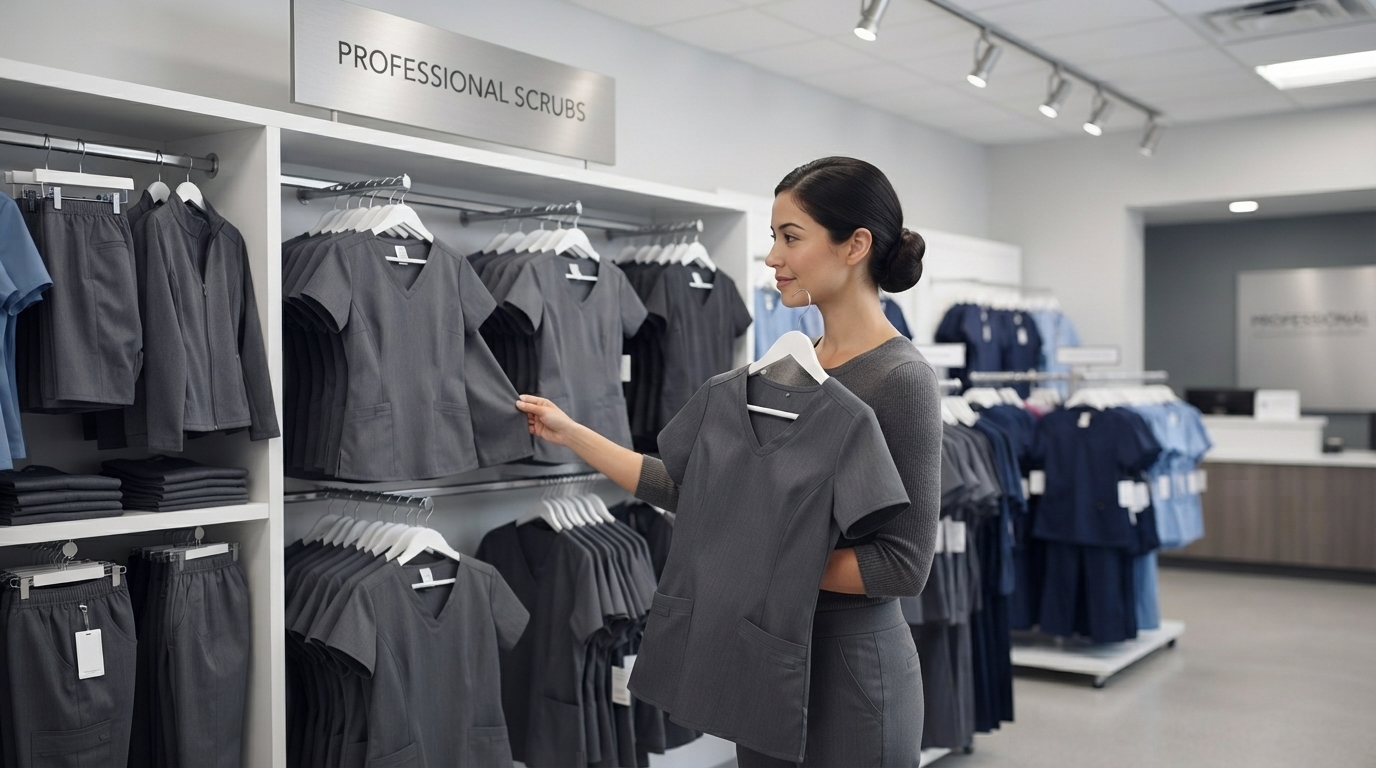
Choosing a medical uniform store is not only about finding scrubs in the right color. Healthcare workers need uniforms that support movement, comfort, professional appearance, and long-term durability. Nurses, medical assistants, dental teams, veterinary staff, physicians, and healthcare students often shop with very different needs, but they all benefit from a store that makes sizing, fabric selection, and repeat buying easier.
A reliable uniform store should offer more than basic scrub tops and pants. It should help buyers compare brands, understand fit differences, find proper lengths, review return options, and choose workwear that fits the demands of clinical life. For shoppers searching through medical uniform shops, the best choice is usually the one that balances product selection with practical fit guidance and local or online convenience.
Quick Answer
A good medical uniform store should offer a wide range of scrub brands, clear size options, helpful product categories, professional workwear for different healthcare roles, return or exchange support, and knowledgeable assistance for individual or group buyers. The strongest stores make it easy to compare fit, fabric, color, pockets, pant length, jackets, lab coats, and accessories before purchasing.
Healthcare workers should look for:
- Multiple scrub brands and collections
- Women’s, men’s, petite, tall, short, and regular options
- Scrub tops, pants, jackets, lab coats, underscrubs, and accessories
- Clear color and size availability
- In-store try-on or accurate online sizing support
- Return and exchange flexibility
- Group ordering or embroidery services when needed
- Store hours, directions, and location details
- Helpful staff who understand healthcare workwear needs
Why the Right Medical Uniform Store Matters
Scrubs are work clothing, but they are also part of the healthcare worker’s daily performance. A poorly chosen uniform can create avoidable discomfort during long shifts. Pants may slide down, tops may pull at the shoulders, fabric may trap heat, or pockets may not support the tools needed during a shift.
Healthcare work often requires walking, bending, reaching, lifting, charting, and moving quickly between rooms. OSHA’s healthcare guidance explains that healthcare workers may face multiple workplace hazards, including ergonomic and biological risks. While scrubs do not replace workplace safety controls, good medical uniforms can support mobility, coverage, and practical daily function. More context is available through OSHA’s resource on healthcare workplace safety.
A strong uniform store helps reduce buying mistakes by giving shoppers access to:
- Better fit comparison
- More size variety
- Brand-specific options
- Workwear suited to different roles
- Clearer product information
- Local fitting help when needed
- Easier reordering
Check the Store’s Scrub Selection First
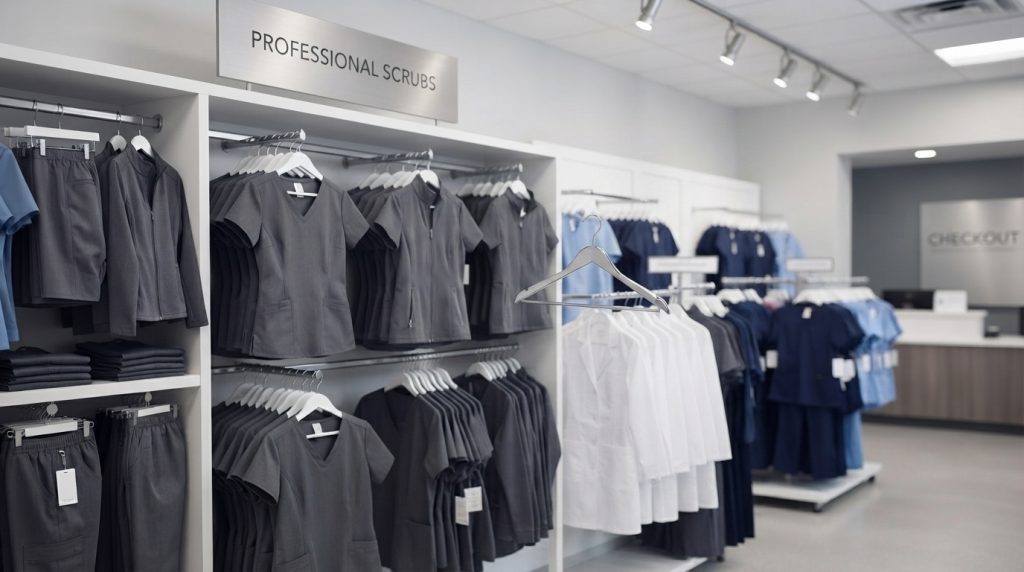
A medical uniform store should not offer only one generic scrub style. Healthcare workers have different job duties, body types, and uniform requirements. A good store should carry a broad selection of scrub tops, pants, jackets, lab coats, underscrubs, and accessories.
Core categories to look for
A complete medical uniform store should usually include:
- Women’s scrub tops
- Women’s scrub pants
- Men’s scrub tops
- Men’s scrub pants
- Scrub jackets
- Lab coats
- Underscrubs
- Scrub bags
- Stethoscope cases
- Petite scrub pants
- Tall scrub pants
- Short-length scrub pants
- Regular-length scrub pants
This matters because many healthcare workers do not fit perfectly into standard sizing. A petite nurse, tall medical assistant, broad-shouldered clinician, or shorter male healthcare worker may need specific lengths and cuts. A store with more category depth gives shoppers a better chance of finding scrubs that feel natural during real shifts.
Look for Brand Variety
Different scrub brands fit differently. One brand may feel more athletic, while another may feel softer, more relaxed, more structured, or more fashion-focused. A store with multiple brands gives healthcare workers more control over comfort and style.
When comparing brands, shoppers should ask:
- Does the top fit slim, classic, relaxed, or athletic?
- Does the pant sit at the natural waist, mid-rise, or high rise?
- Does the fabric stretch enough for bending and reaching?
- Does the collection include matching jackets?
- Are men’s and women’s options both available?
- Are petite, tall, or short lengths offered?
- Does the brand carry the required workplace color?
A store that carries several established scrub collections can help shoppers avoid buying based on size labels alone. A medium in one collection may not feel the same as a medium in another. Brand variety allows the buyer to compare fit and fabric before committing to multiple sets.
Make Sure the Store Supports Proper Sizing
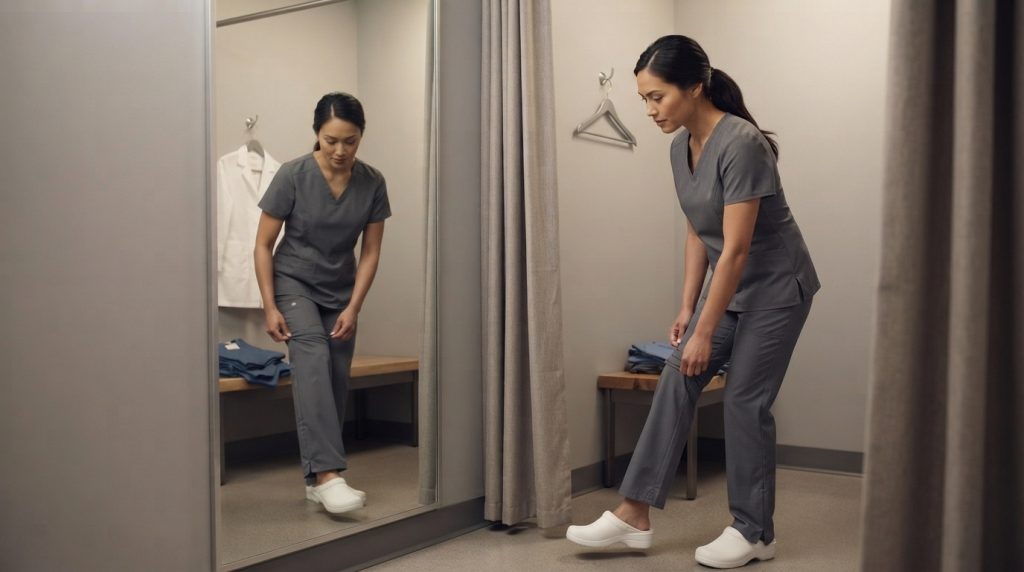
Sizing is one of the biggest reasons healthcare workers return scrubs. A good uniform store should make sizing easier, not more confusing.
In-store sizing advantages
In-person shopping is helpful for buyers who are:
- Starting a new healthcare job
- Buying scrubs for the first time
- Changing brands
- Between sizes
- Unsure about pant length
- Required to wear a specific color
- Shopping for clinical rotations
- Comparing joggers, cargo pants, flare pants, or straight-leg styles
Workers comparing where to buy scrubs may want to prioritize stores that allow them to check shoulder movement, waistband comfort, pocket placement, pant length, and fabric feel before purchasing.
Online sizing advantages
Online shopping can also work well when the buyer already knows the preferred size, brand, and color. A good online store should offer clear categories, size charts, filters, and product details.
Online shoppers should check:
- Size chart availability
- Product measurements
- Fabric content
- Model or fit notes
- Return and exchange policy
- Color filters
- Length options
- Brand collection pages
Check Fabric and Comfort Options
Modern medical scrubs use a variety of fabrics. Some are soft and flexible. Others are lightweight, structured, moisture-wicking, or wrinkle-resistant. A good medical uniform store should make it easy to compare fabric types and choose based on the work setting.
Common fabric qualities healthcare workers look for
- Stretch: Helps with bending, lifting, reaching, and fast movement.
- Breathability: Helps workers stay more comfortable in warm clinical settings.
- Softness: Matters during long shifts and repeated wear.
- Durability: Helps scrubs hold up through frequent washing.
- Wrinkle resistance: Supports a clean and professional appearance.
- Shape recovery: Helps scrubs avoid sagging after hours of wear.
- Easy care: Reduces time spent ironing or managing special wash routines.
Long shifts can place physical demands on healthcare workers. NIOSH has discussed how prolonged standing at work may contribute to fatigue, discomfort, leg swelling, and musculoskeletal strain. Practical workwear is only one part of comfort, but scrubs that fit well and move properly can help reduce unnecessary irritation during demanding shifts. See NIOSH’s resource on prolonged standing at work for additional workplace context.
Evaluate Pocket Placement and Daily Function

Pockets are not a small detail in healthcare work. Many healthcare workers carry pens, phones, gloves, scissors, alcohol pads, badge reels, tape, small tools, notepads, or personal items.
A store with varied scrub styles helps workers choose the right pocket layout for their job.
Useful pocket types
- Chest pockets
- Front patch pockets
- Cargo pockets
- Zippered pockets
- Hidden pockets
- Pen slots
- Badge loops
- Interior pockets
- Side-entry pockets
A nurse may prefer cargo pants with multiple storage points. A physician may prefer a cleaner scrub top and a lab coat. A dental assistant may need pockets that do not interfere with seated work. A medical assistant may need easy access to pens, rooming notes, and small tools.
A strong store should make these differences easy to compare.
Review Color Availability and Workplace Rules
Many healthcare employers use uniform color rules. Different departments may wear navy, royal blue, ceil blue, black, pewter, wine, teal, or other approved colors. Students may also need school-approved colors for clinical rotations.
Before buying, healthcare workers should confirm:
- Required scrub color
- Approved brand or style restrictions
- Whether jackets must match
- Whether underscrubs are allowed
- Whether embroidery is required
- Whether logos or department names are needed
- Whether shoes, lab coats, or accessories have rules
A good uniform store should make color filtering and color comparison simple. This is especially important for group buyers who need consistent colors across multiple employees.
Consider Store Location, Hours, and Convenience
Convenience matters when healthcare workers need scrubs before a new job, a shift change, a clinical rotation, or a team rollout. Store hours, location, parking, and online ordering options can affect the buying decision.
For local shoppers, Google Business Profiles are useful for confirming directions, hours, and nearby access. For example, healthcare workers in the Murray area can review a medical uniform store location before visiting.
When comparing local stores, shoppers should check:
- Store hours
- Address and directions
- Parking convenience
- Phone support
- In-stock product variety
- Return and exchange options
- Local pickup or online ordering availability
- Staff knowledge
People searching for scrub stores in Utah often need a practical mix of local availability and broader online selection. The best store experience should make both options simple.
Look for Group Uniform Support
A medical uniform store is even more valuable when it can support healthcare teams, not just individual buyers. Clinics, dental practices, veterinary offices, med spas, home health providers, and specialty care offices often need consistent uniforms across staff.
Group uniform services may include
- Approved color selection
- Staff sizing support
- Embroidery
- Logo placement
- Group ordering
- Department-specific styles
- Repeat ordering
- Custom webstore setup
- Employee-pay or company-pay options
Group support is helpful because staff members often need different fits even when the team wears the same color. One employee may prefer joggers, another may prefer straight-leg pants, and another may need petite or tall sizing. A strong uniform program can keep the team consistent without forcing every person into the same exact cut.
Check Return and Exchange Policies
Scrub fit can vary by brand, fabric, and cut. A return or exchange policy is important, especially when buying online or trying a new collection.
Before purchasing, shoppers should check:
- Return window
- Exchange rules
- Whether tags must remain attached
- Whether washed items are returnable
- Whether sale items are final sale
- Shipping return requirements
- In-store exchange options
A clear return policy builds buyer confidence. It also helps healthcare workers avoid being stuck with scrubs that do not fit correctly during work.
Look for Professional Accessories
A medical uniform store should ideally support more than scrub tops and pants. Accessories help healthcare workers stay organized during shifts and commutes.
Useful accessory categories include:
- Scrub jackets
- Underscrubs
- Lab coats
- Badge reels
- Scrub bags
- Backpacks
- Stethoscope cases
- Compression socks
- Work shoes, if available
The CDC’s hand hygiene guidance emphasizes the importance of infection prevention practices in healthcare settings. While accessories and apparel should always be used according to workplace policy, healthcare workers should choose items that are practical, cleanable, and appropriate for their environment. See the CDC’s guidance on hand hygiene in healthcare settings for related infection prevention context.
Compare Price With Long-Term Value
Price matters, especially for students, new employees, and workers buying several sets at once. However, the cheapest scrub is not always the best value.
A good medical uniform store should offer a range of price points, but shoppers should also consider:
- Fabric durability
- Seam quality
- Color retention
- Waistband comfort
- Pocket function
- Wrinkle resistance
- Fit after washing
- Availability of replacement pieces
- Matching tops and pants
A slightly better scrub set may save money over time if it lasts longer, washes better, and stays comfortable through repeated use.
Signs of a Reliable Medical Uniform Store
Healthcare workers can use the following checklist when comparing uniform shops.
A strong store should offer:
- Clear women’s and men’s scrub categories
- Multiple trusted scrub brands
- Fit options for petite, tall, short, and regular lengths
- Scrub tops, pants, jackets, lab coats, and accessories
- Helpful product descriptions
- Easy-to-use online filters
- Local store details
- Return and exchange information
- Group uniform support
- Embroidery options, if needed
- Responsive customer support
- Consistent inventory for repeat purchases
A weak store may have limited sizing, unclear policies, poor category structure, minimal brand variety, or no support for workplace-specific uniform needs.
Final Checklist Before Choosing a Store
Before choosing a medical uniform store, healthcare workers should ask:
- Does the store carry the required scrub color?
- Are multiple brands available?
- Can the buyer compare fit and fabric?
- Are petite, tall, short, or regular lengths available?
- Are men’s and women’s options clearly separated?
- Does the store carry jackets, lab coats, and underscrubs?
- Are return and exchange rules easy to find?
- Is there a local store or reliable online shopping option?
- Can the store help teams with group ordering?
- Does the store make repeat purchases easy?
The right medical uniform store should help healthcare workers shop with confidence. Good scrubs should fit the body, match workplace expectations, support movement, and hold up through the demands of daily care.

FAQs
What should healthcare workers look for in a medical uniform store?
Healthcare workers should look for brand variety, size options, clear color availability, scrub tops and pants, jackets, lab coats, return policies, and knowledgeable support. A strong store should help shoppers compare fit, fabric, pockets, and pant lengths before buying.
Is it better to buy scrubs from a local store or online?
A local store is helpful for trying on sizes, comparing brands, and checking fabric feel. Online shopping is useful for repeat purchases, broader browsing, and ordering known sizes. Many healthcare workers use both depending on urgency and fit confidence.
Why do scrub sizes vary between brands?
Scrub brands use different cuts, fabrics, waistbands, and fit models. One brand may fit slim, while another may feel relaxed or athletic. This is why size charts, try-ons, and brand-specific fit guidance are important.
Do medical uniform stores help with group scrub orders?
Many medical uniform stores support group orders for clinics, dental offices, veterinary teams, med spas, and healthcare organizations. Services may include color selection, embroidery, sizing support, group ordering, and repeat uniform programs.
How many scrub sets should a healthcare worker buy?
The right number depends on work schedule, laundry routine, dress code, and budget. Many healthcare workers keep enough sets for scheduled shifts plus at least one backup set for emergencies, spills, or unexpected schedule changes.