
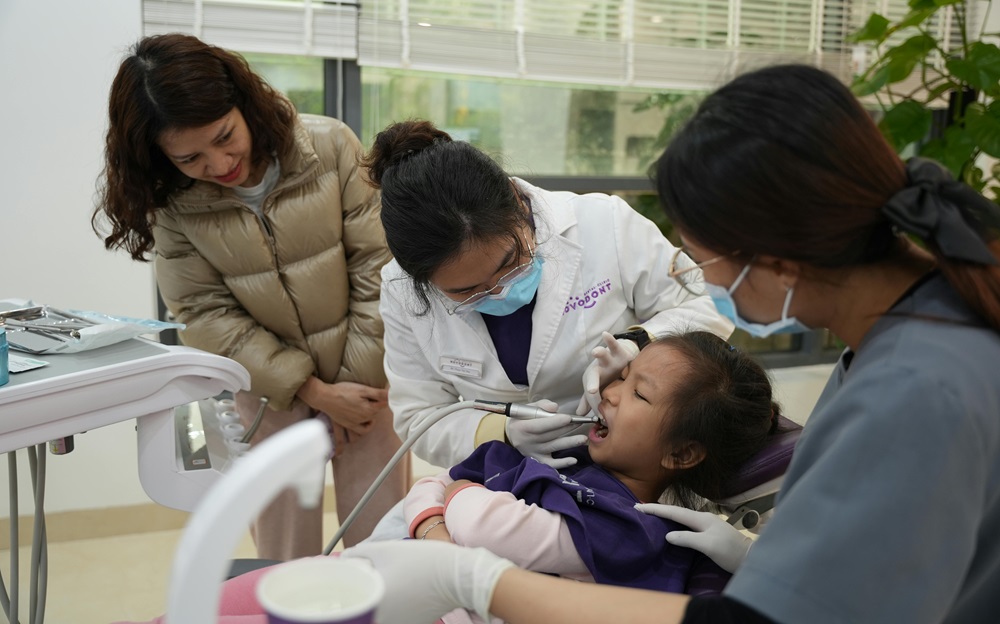
Most children feel some fear before their first dental visit, and that’s completely normal. Research shows nearly 20% of kids experience dental anxiety, and for some, it starts before they even walk through the door.
If your child gets nervous at just the mention of a kids dentist appointment, you’re not alone, and there are practical things you can do before the big day.
What Age-Appropriate Language Actually Sounds Like
Skip the clinical words. Your child doesn’t need to hear “drill,” “injection,” or “extraction” before their first visit. Use simple, non-threatening language instead.
For toddlers (ages two to four), keep it vague and positive. Something like, “The dentist is going to count your teeth and make sure they’re healthy,” works well.
For kids aged five to eight, you can be a little more specific: “They’ll use a tiny mirror and a small tool to clean your teeth.” Avoid any description that involves pain, sharp objects, or restraint, even casually.
A 2019 study published in the European Archives of Paediatric Dentistry found that children whose parents used neutral, descriptive language before dental visits showed significantly less anxiety than those exposed to fearful or overly cautious language.
Practice Runs at Home Help More Than You Think
You can do a simple “pretend dentist” session at home a few days before the real thing.
Grab a toothbrush and a small flashlight. Take turns being the dentist and the patient with your child. Let them count your teeth first, then gently do the same for them. This makes the physical experience feel familiar, not foreign.
| Home Practice Idea | Age Group | Why It Helps |
| Pretend dentist with toothbrush | 2–5 years | Builds familiarity with the physical sensations |
| Watching dentist videos online | 4–8 years | Visual preview reduces fear of the unknown |
| Reading dentist-themed picture books | 2–6 years | Normalizes the experience in a safe setting |
| Role-play with stuffed animals | 3–7 years | Gives children a sense of control |
The key is repetition without pressure. Don’t force it if your child resists; just keep it light and playful.
Comfort Items That Children Actually Use During Appointments
Bringing something familiar from home gives your child a sense of control in an unfamiliar environment.
A small stuffed animal or a favorite toy is often more effective than you’d expect. One survey by the American Academy of Pediatric Dentistry found that children who brought a comfort object to medical or dental visits reported feeling calmer and more cooperative during the procedure.
Other things that work:
A pair of headphones with their favorite music or a podcast they enjoy can drown out the sounds that trigger anxiety, like the whirring of tools. Noise is often a bigger fear trigger than the procedure itself.
A weighted lap pad, if your child responds well to deep pressure, can also help. Some pediatric dental offices offer these, so it’s worth asking ahead of time.
One thing to avoid: tablets or screens. They tend to distract children from responding to the dentist, which can make the appointment longer and more stressful.
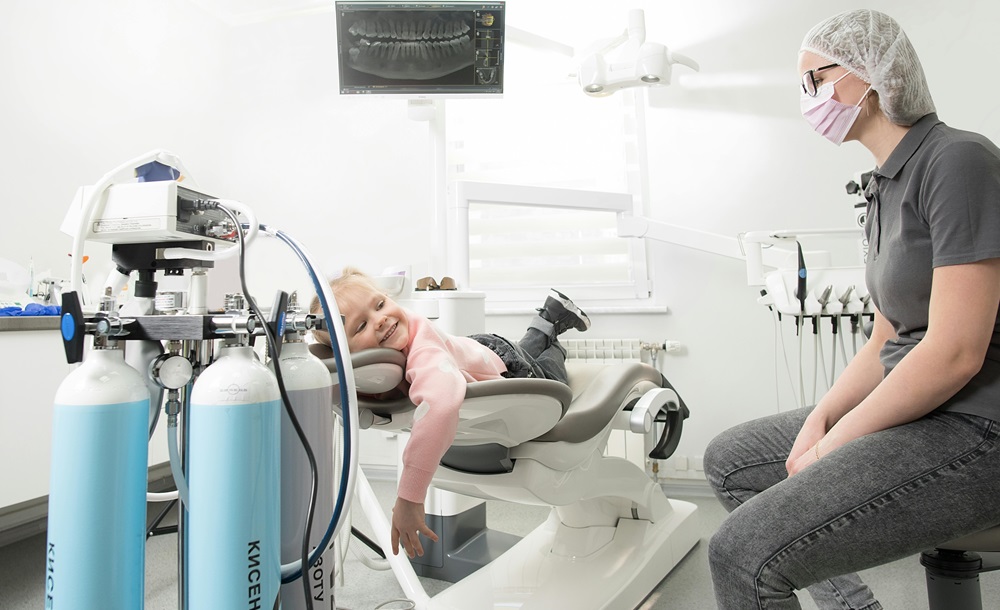
On the Day Itself, Timing and Your Own Body Language Matter
Schedule the appointment in the morning when your child is rested and not yet worn out from the day. Hungry or tired kids are significantly harder to calm down.
Your own calm matters more than any script you rehearse. Children pick up on parental anxiety extremely quickly.
A 2020 study in Frontiers in Psychology found that parental dental fear is one of the strongest predictors of dental anxiety in children under eight. If you’re nervous about the appointment, it’ll show, and your child will mirror it.
Keep your tone casual the morning of. Don’t over-prepare them with a long talk. A simple, “You’ve got your dentist visit today, it’ll be quick,” is enough.
FAQs
At what age should a child first visit the dentist?
Ans: Most dental organizations recommend a child’s first dental visit by their first birthday or within six months of their first tooth coming in. Early visits help build familiarity and catch any early issues.
What if my child cries or refuses to open their mouth?
Ans: This is common and most pediatric dentists are trained to handle it. Let the dentist lead. Trying to convince or bargain mid-appointment often makes things worse.
Should I tell my child what to expect in detail?
Ans: Keep it simple and honest. You don’t need to walk them through every step. Focus on the purpose: keeping their teeth clean and healthy.
Can I stay in the room with my child?
Ans: Most pediatric dental offices allow a parent in the room, especially for young children. Ask ahead when you book.
How do I know if my child’s anxiety is more serious?
Ans: If your child has severe panic, physical symptoms like vomiting before appointments, or the fear is affecting daily life, a chat with your pediatrician is a good next step before the kids dentist visit.