
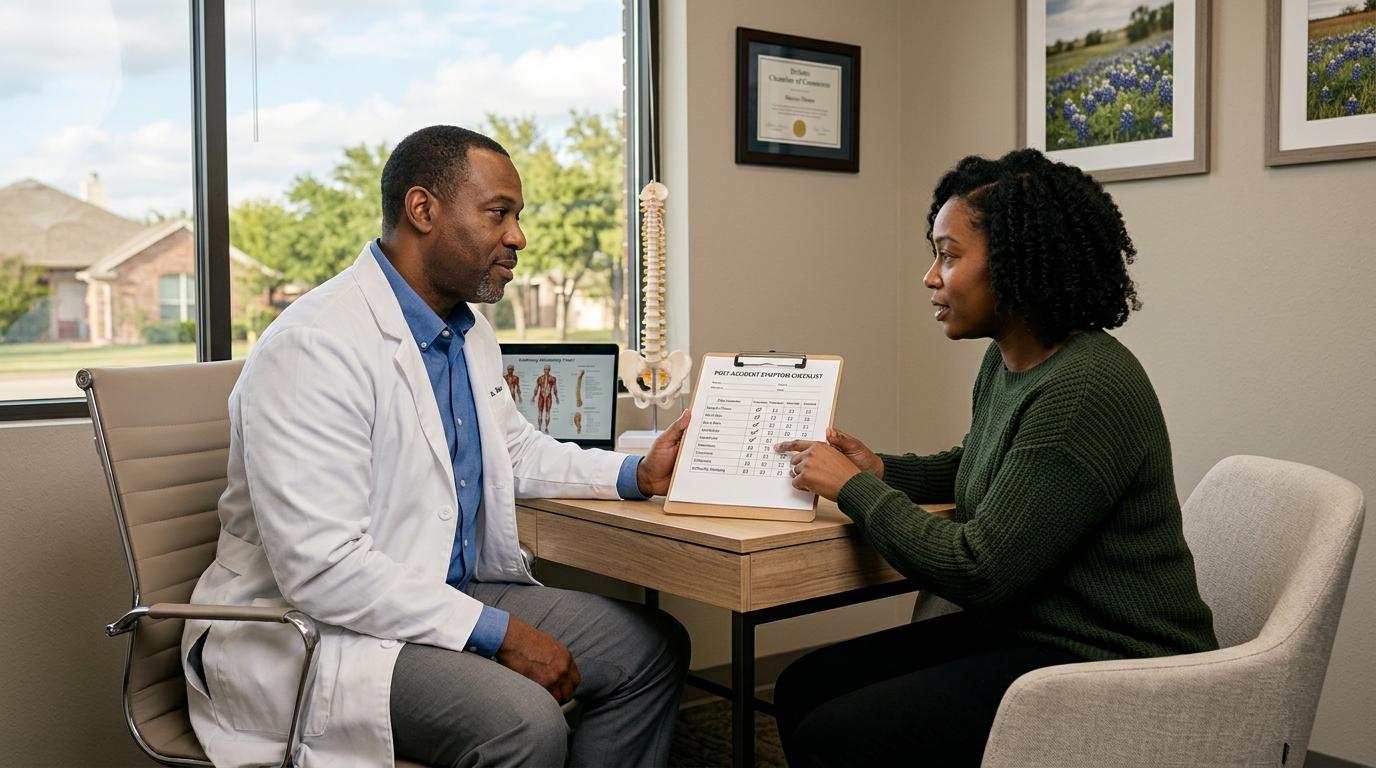
After a car accident, the hardest question is often not “Do I hurt?” It is “What does this pain mean?”
A stiff neck may feel minor at first. A headache may seem like stress. Back soreness may be blamed on tension from the crash. But accident-related symptoms can change over hours or days, and small movement problems can become more noticeable once normal life resumes.
That is why a professional accident-focused evaluation matters.
A DeSoto accident doctor can help sort symptoms, check movement, identify patterns, recommend the right next step, and build a structured recovery plan when chiropractic care or rehabilitation therapy may be appropriate.
Quick Answer
You may need a professional DeSoto accident doctor after a crash if you develop neck pain, back pain, headaches, stiffness, soreness, soft tissue discomfort, joint pain, numbness, tingling, reduced mobility, or pain that affects driving, work, sleep, walking, sitting, lifting, or normal daily routines.
A professional accident-focused evaluation may help answer three practical questions:
- What symptoms are showing up?
- How are those symptoms affecting movement and daily function?
- What care plan may help support recovery safely?
The U.S. Department of Transportation explains that post-crash care is part of a safer response after serious crashes because timely care can support better outcomes.
If symptoms are severe, worsening, or include loss of consciousness, confusion, repeated vomiting, chest pain, trouble breathing, weakness, numbness, slurred speech, or severe headache, seek emergency medical care immediately.
Key Takeaways
- Accident symptoms can appear hours or days after a crash.
- A professional evaluation can help separate general soreness from symptoms that need structured care.
- Chiropractic care may help assess neck pain, back pain, whiplash symptoms, headaches, stiffness, joint pain, and mobility limits.
- Rehabilitation therapy may support movement, strength, flexibility, stability, and daily function.
- Local DeSoto care can make follow-up visits easier for patients near Lancaster, Cedar Hill, Duncanville, Glenn Heights, Red Oak, and surrounding South Dallas communities.
The Real Problem After a Crash: Symptom Confusion
After an accident, many people try to explain symptoms on their own.
They may think:
- “It is probably just soreness.”
- “The headache is probably stress.”
- “My back will loosen up in a few days.”
- “I can still move, so I must be fine.”
- “The crash was not bad enough to cause injury.”
Sometimes symptoms do improve with time. But sometimes pain, stiffness, headaches, soreness, or reduced mobility are signs that the body needs a closer evaluation.
A professional accident doctor can help organize the situation. Instead of guessing, the visit becomes a structured review of pain, movement, timing, daily activity limits, and recovery needs.
Why Professional Evaluation Matters More Than Self-Checking
Self-checking after a crash is limited. You may notice pain but not know what is causing it. You may feel stiffness but not know whether movement is restricted. Also, you can have headaches, but you may not know whether they are connected to neck strain, muscle tension, concussion concerns, or another issue.
A professional evaluation may include:
- Symptom review
- Accident history
- Pain location mapping
- Neck and back mobility checks
- Range-of-motion testing
- Soft tissue assessment
- Joint movement review
- Daily activity discussion
- Functional movement screening
- Treatment recommendations
- Recovery planning
The goal is not to make the situation more complicated. The goal is to make it clearer.
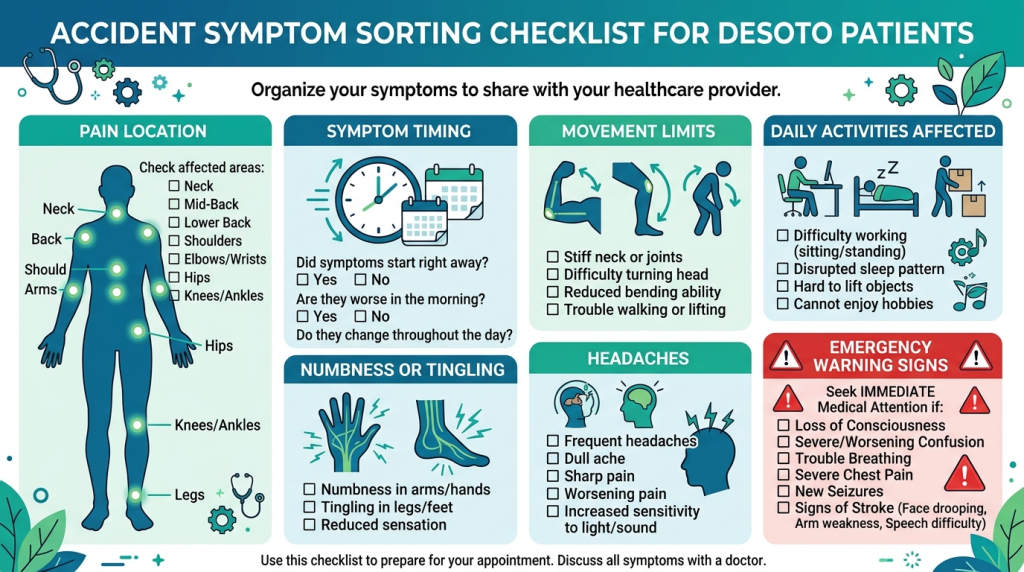
Five Signs You Should Consider Getting Evaluated
Not every ache requires ongoing care. But some symptoms deserve attention, especially when they continue, worsen, or interfere with daily life.
1. Pain Appears Later
Many accident symptoms do not appear immediately. Pain may show up after adrenaline fades or inflammation builds.
Watch for:
- Neck pain
- Back pain
- Headaches
- Shoulder pain
- Knee pain
- Stiffness
- Soreness
- Muscle tightness
- Reduced range of motion
Delayed symptoms are one reason many patients choose to get checked even if they felt fine at the scene.
2. Movement Feels Different
A professional accident evaluation often looks beyond pain level. Movement matters too.
You may notice:
- Trouble turning your head
- Stiffness when getting out of bed
- Pain while sitting
- Back tightness while driving
- Shoulder discomfort while reaching
- Knee pain on stairs
- Difficulty bending or lifting
These changes may reveal how the crash affected function.
3. Driving Becomes Uncomfortable
Driving requires more mobility than people realize. You need to turn your head, check blind spots, rotate your shoulders, sit upright, brake, steer, and react quickly.
After a crash, driving may become difficult because of:
- Neck stiffness
- Back pain while sitting
- Shoulder pain while steering
- Headaches
- Hip or knee discomfort
- Numbness or tingling
- Reduced confidence behind the wheel
If driving feels different after an accident, that is worth mentioning during an evaluation.
4. Pain Affects Sleep or Work
Sleep and work are two of the first areas where accident injuries may become obvious.
Pain may affect sleep by making it hard to find a comfortable position. Work may become harder because of sitting, standing, lifting, typing, walking, or concentrating through headaches.
A professional evaluation can help connect symptoms to real-life activity limitations.
5. Symptoms Keep Changing
Some patients feel better one day and worse the next. Symptoms may flare with driving, housework, sitting, walking, or returning to work.
Changing symptoms do not always mean something is wrong, but they should be tracked. A structured recovery plan can help monitor progress and adjust care when needed.
What a Professional Accident Doctor May Check
An accident-focused visit is not only about asking where it hurts. It should help create a clearer picture of how the crash affected the body.
| Evaluation Area | What It Helps Clarify |
| Symptom timing | Whether pain appeared immediately or developed later |
| Pain location | Neck, back, shoulder, knee, head, joints, or soft tissues |
| Range of motion | Whether movement is limited after the crash |
| Daily function | Whether driving, sleep, work, walking, or lifting are affected |
| Soft tissue signs | Soreness, tightness, tenderness, bruising, or swelling |
| Nerve-related symptoms | Numbness, tingling, weakness, or radiating discomfort |
| Recovery progress | Whether symptoms are improving, worsening, or changing |
This type of structured review can help patients avoid guessing about their condition.
Common Conditions Accident Doctors May Evaluate
Every collision is different. Injury patterns may depend on speed, impact direction, body position, seatbelt restraint, airbag deployment, and whether the person braced before impact.
Whiplash Symptoms
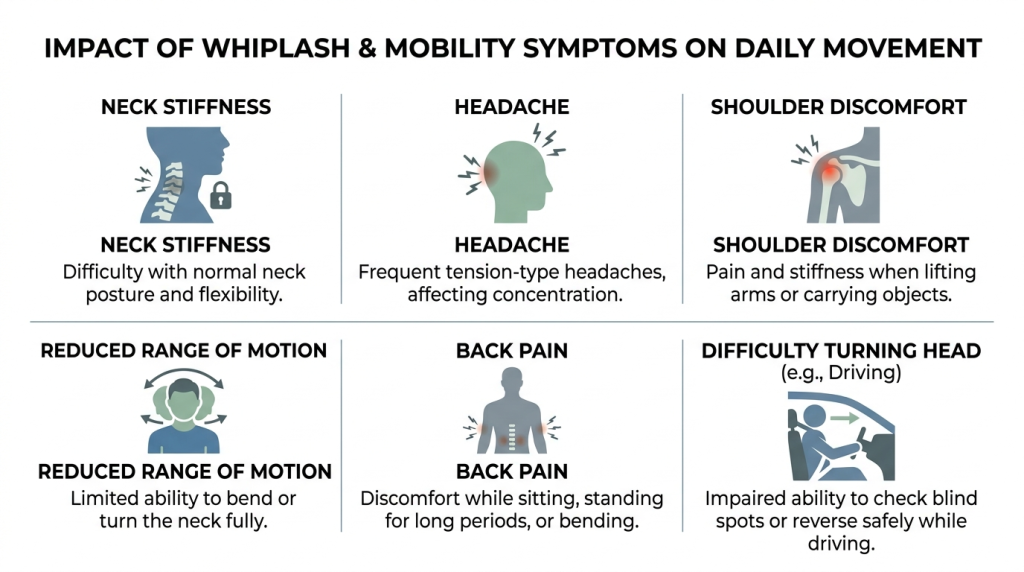
Whiplash can happen when the neck moves forcefully forward and backward during a crash. Mayo Clinic explains that whiplash may cause neck pain, stiffness, headaches, shoulder or upper back pain, reduced range of motion, tingling, tiredness, and dizziness.
Whiplash may affect:
- Turning the head
- Checking blind spots
- Sleeping comfortably
- Working at a screen
- Looking down at a phone
- Lifting or carrying items
- Returning to exercise
Because symptoms may develop within days, neck pain and stiffness after a crash should be monitored carefully.
Neck Pain
Neck pain after an accident may involve muscle strain, ligament stress, joint irritation, soft tissue injury, or whiplash-related movement problems.
Patients should pay attention to neck pain that affects:
- Driving
- Sleeping
- Desk work
- Head turning
- Lifting
- Reaching
- Daily posture
Back Pain
Back pain can affect nearly every routine movement. Sitting, standing, bending, lifting, walking, and driving may all feel harder after a crash.
Back pain should be evaluated if it persists, worsens, travels into the hips or legs, or limits normal activity.
Soft Tissue Injuries
Soft tissue injuries affect muscles, ligaments, and tendons. These injuries may cause soreness, swelling, tenderness, bruising, tightness, and reduced mobility.
They can affect:
- Reaching
- Carrying
- Walking
- Sitting
- Sleeping
- Exercise
- Household chores
- Work movement
Headaches After a Crash
Headaches may be related to neck strain, whiplash, muscle tension, concussion, or another injury pattern.
A headache after a crash should be taken seriously if it is severe, worsening, or appears with confusion, vomiting, dizziness, slurred speech, weakness, vision changes, or loss of consciousness.
Professional Care vs. Waiting It Out
Some patients try to rest, stretch, or manage pain at home after a crash. Mild soreness may improve. But persistent or worsening symptoms should not be ignored.
| Approach | What It Does | What It May Miss |
| Waiting it out | Gives mild soreness time to improve | May miss movement restrictions or delayed symptoms |
| Pain relief only | May reduce discomfort temporarily | Does not explain why pain is happening |
| Self-stretching | May feel helpful for mild stiffness | May aggravate symptoms if done too soon or too aggressively |
| Professional evaluation | Reviews symptoms, movement, daily function, and recovery needs | Best used after emergency concerns are ruled out |
A professional accident doctor can help patients determine whether chiropractic care, rehabilitation therapy, soft-tissue support, or additional evaluation may be appropriate.
What Care May Include After the Evaluation
A care plan should be based on the patient’s symptoms, injury type, exam findings, health history, and recovery progress.
Chiropractic Care
Chiropractic care may help address spinal and joint mobility problems after a crash. When the neck, back, or joints are affected by sudden impact, patients may experience pain, stiffness, and reduced movement.
Rehabilitation Therapy
Rehabilitation therapy may help restore mobility, strength, flexibility, stability, and daily function.
It may include:
- Guided mobility exercises
- Stretching
- Strengthening
- Stability work
- Movement retraining
- Functional movement support
- Progressive return-to-activity guidance
Soft Tissue Support
Soft tissue-focused care may help reduce muscle tightness, improve comfort, and support range of motion in muscles, ligaments, and tendons affected by the accident.
Progress Monitoring
Recovery can change from week to week. Regular monitoring helps determine whether symptoms are improving, whether care should be adjusted, and whether additional evaluation may be needed.
The First-Visit Preparation Board
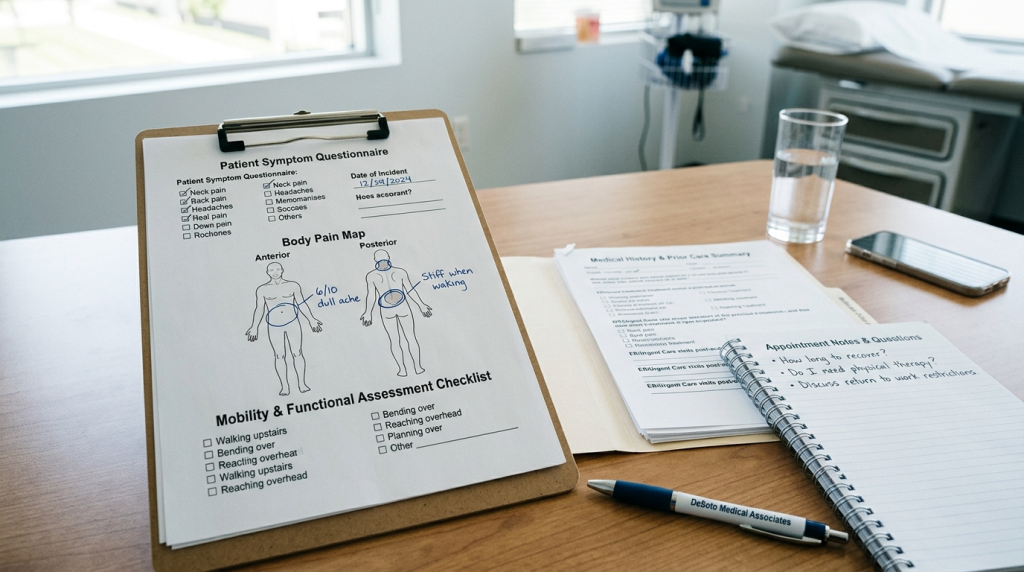
Before visiting an accident doctor, it helps to organize the details that are easy to forget.
| Bring or Prepare | Helpful Notes |
| Symptom list | Where pain is located and when it started |
| Activity limits | Driving, work, sleep, walking, lifting, sitting, or standing issues |
| Prior care records | ER, urgent care, imaging, or discharge paperwork if available |
| Medication list | Current medications or pain-relief methods |
| Accident details | Date, impact direction, seat position, and airbag deployment |
| Transportation needs | Ask whether transportation assistance may be available |
| Questions | Write down concerns before the visit |
Even a short note on your phone can help make the first visit more focused.
Why Local DeSoto Access Matters
After a car accident, recovery may require more than one visit. Local access can make follow-up care easier, especially if driving, sitting, or neck turning is uncomfortable.
Premier Injury Clinics of DFW’s DeSoto location serves patients from:
- DeSoto
- Lancaster
- Cedar Hill
- Duncanville
- Glenn Heights
- Red Oak
- Nearby South Dallas communities
The DeSoto clinic is located at:
1100 E Pleasant Run Rd Suite 150
DeSoto, TX 75115
This location may be helpful for patients who live, work, or commute near:
- Pleasant Run Road
- Hampton Road
- I-35E
- U.S. 67
- Belt Line Road
- Wintergreen Road
Transportation assistance may be available for qualifying patients recovering after a car accident.
Red Flags: When to Seek Emergency Care
Chiropractic care and rehabilitation therapy may help many accident-related musculoskeletal symptoms, but some symptoms require emergency medical attention.
The CDC lists danger signs after a possible traumatic brain injury, including worsening headache, repeated vomiting, weakness, numbness, seizures, slurred speech, confusion, unusual behavior, unequal pupils, or loss of consciousness.
Seek emergency care immediately if you experience:
- Loss of consciousness
- Chest pain
- Trouble breathing
- Severe or worsening headache
- Confusion
- Repeated vomiting
- Weakness on one side of the body
- Slurred speech
- Heavy bleeding
- Severe abdominal pain
- Severe neck or back pain after trauma
- Numbness or weakness in the arms or legs
- Loss of bladder or bowel control
When in doubt, choose emergency care first. Once serious conditions are ruled out, accident-focused chiropractic care and rehabilitation may be part of the recovery process.
DeSoto Accident Doctor Checklist
Use this checklist if you are unsure whether to get evaluated after a crash.
| Question | Why It Matters |
| Did pain appear hours or days later? | Delayed symptoms are common after accidents |
| Is neck or back movement limited? | Reduced motion may point to injury-related stiffness |
| Are headaches new after the crash? | Headaches should be monitored carefully |
| Is driving uncomfortable? | Neck, back, shoulder, or knee pain may affect safety and comfort |
| Is sleep disrupted by pain? | Sleep problems can slow daily recovery |
| Is work harder because of symptoms? | Daily function is part of recovery planning |
| Is there numbness, tingling, or weakness? | These symptoms should be reported clearly |
| Are symptoms worsening? | Worsening symptoms may need prompt attention |
| Do you need help getting to care? | Transportation may be available for qualifying patients |
Frequently Asked Questions
A DeSoto accident doctor may evaluate symptoms such as neck pain, back pain, whiplash symptoms, headaches, stiffness, soreness, soft tissue pain, joint discomfort, numbness, tingling, and reduced mobility. Care may include chiropractic treatment, rehabilitation therapy, progress monitoring, and recovery planning.
Waiting may be reasonable for very mild soreness, but symptoms that continue, worsen, or affect daily life should be evaluated. A professional assessment can help identify movement limits, symptom patterns, and care options.
Yes. Symptoms may appear hours or days after a crash. Delayed symptoms may include neck pain, back pain, headaches, stiffness, soreness, soft tissue discomfort, and reduced range of motion.
Watch for neck pain, back pain, headaches, shoulder pain, knee pain, stiffness, soreness, numbness, tingling, joint discomfort, reduced mobility, and pain while sitting, standing, walking, or driving.
Chiropractic care may help evaluate whiplash-related symptoms such as neck pain, stiffness, headaches, shoulder discomfort, reduced range of motion, and muscle tightness. Care may also include rehabilitation therapy and progress monitoring.
Bring symptom notes, prior urgent care or ER paperwork if available, a medication list, accident details, and notes about how symptoms affect driving, work, sleep, walking, lifting, or sitting.
Seek emergency care immediately for serious symptoms. For non-emergency symptoms such as neck pain, back pain, headaches, stiffness, soreness, or reduced movement, consider scheduling an evaluation as soon as symptoms appear.
Transportation assistance may be available for qualifying patients recovering after a car accident. Availability may vary, so patients should contact the DeSoto clinic for details.
Premier Injury Clinics of DFW’s DeSoto location serves DeSoto, Lancaster, Cedar Hill, Duncanville, Glenn Heights, Red Oak, and surrounding South Dallas communities.
Go to the emergency room or call 911 for serious or worsening symptoms, including loss of consciousness, chest pain, trouble breathing, severe headache, confusion, repeated vomiting, weakness, slurred speech, numbness, or severe neck or back pain after trauma.
Final Thoughts
After a car accident, it is easy to underestimate symptoms. Pain may appear later, movement may feel different, and daily activities like driving, work, sleep, walking, and lifting may become more difficult.
A professional DeSoto accident doctor can help sort symptoms, evaluate movement, support recovery planning, and recommend care based on the patient’s condition.
Premier Injury Clinics of DFW’s DeSoto location provides accident-focused chiropractic care, rehabilitation therapy, same-day evaluations when available, structured recovery plans, progress monitoring, and transportation assistance for qualifying patients.
Visit the Premier Injury Clinics of DFW DeSoto location page to learn more about accident injury evaluations, chiropractic care, rehabilitation therapy, and recovery support after a car accident.