

The best scrub fabrics for long shifts should help healthcare workers move comfortably, stay presentable, and manage repeated washing without feeling stiff, heavy, or distracting. Nurses, CNAs, doctors, medical assistants, dental workers, veterinary teams, technicians, and healthcare students often need scrubs that support movement, storage, breathability, and professional appearance across demanding workdays.
Workers comparing stretch medical scrubs should look beyond color and size. Fabric content, stretch recovery, moisture comfort, weight, softness, pocket structure, and laundering behavior all affect how scrubs feel after several hours of standing, walking, bending, sitting, charting, and assisting patients.
Quick Answer
The best scrub fabrics for long shifts usually combine stretch, breathability, softness, durability, and easy-care performance. Healthcare workers should compare polyester blends, rayon blends, spandex stretch, cotton-rich fabrics, and performance materials based on movement, warmth, wrinkle resistance, shape retention, pocket support, and how the fabric feels after repeated washing.
Before buying scrubs for long shifts, healthcare workers should review:
- Fabric content
- Stretch and recovery
- Breathability
- Moisture comfort
- Fabric weight
- Softness against the skin
- Wrinkle resistance
- Fade resistance
- Pilling resistance
- Pocket structure
- Waistband comfort
- Fit after washing
- Layering needs
- Workplace dress code requirements
- Return or exchange policy before buying several sets
Why Scrub Fabric Matters During Long Shifts
Scrubs are not only uniforms. They are workwear worn during real movement, changing temperatures, repeated laundering, and long periods of standing or walking. A scrub set may look good at the start of the day but feel uncomfortable later if the fabric traps heat, pulls at the shoulders, stretches out, wrinkles badly, or becomes heavy.
Fabric can affect:
- Shoulder movement
- Hip and thigh flexibility
- Breathability
- Moisture comfort
- Pocket sagging
- Waistband feel
- Wrinkle resistance
- Layering comfort
- Color retention
- Durability after washing
- Professional appearance during patient-facing work
Healthcare workers comparing breathable scrubs should think about how the fabric performs during a full shift, not just how it feels on the hanger.
Stretch Is Important for Clinical Movement
Stretch is one of the most useful features in modern medical scrubs. Healthcare workers bend, reach, lift light supplies, walk between rooms, sit at workstations, clean rooms, and move quickly throughout the day. Fabric with stretch can make these movements feel easier.
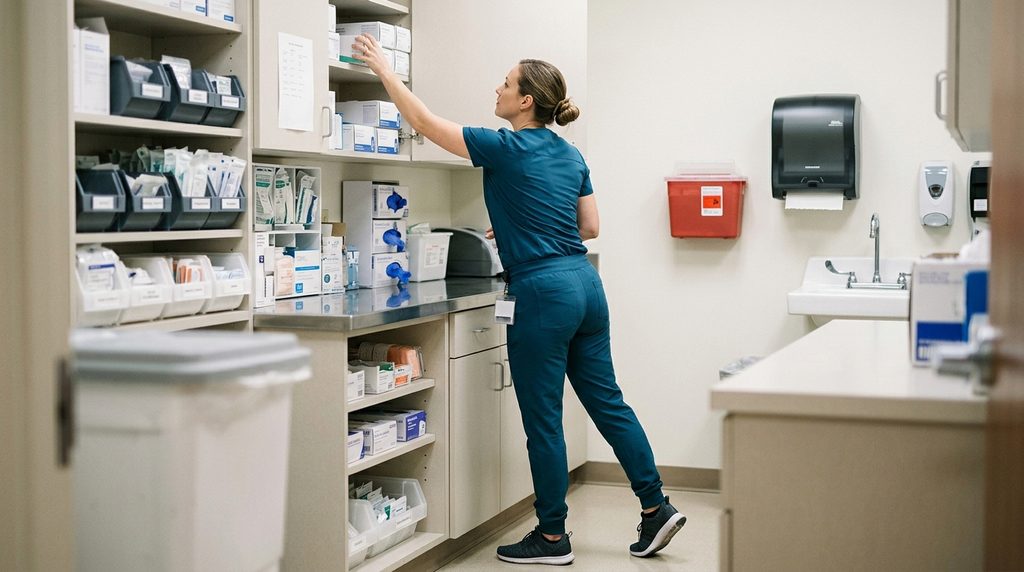
Stretch may help during:
- Reaching overhead
- Sitting and standing repeatedly
- Bending at the waist
- Walking quickly through hallways
- Leaning during dental or veterinary work
- Carrying items in pockets
- Climbing stairs
- Layering with underscrubs or jackets
- Moving between clinical and administrative tasks
Stretch should not mean loose or sloppy. The best scrub fabrics move with the body and then return to shape.
Stretch Recovery Matters as Much as Stretch
A fabric can stretch but still perform poorly if it does not recover. Stretch recovery means the fabric returns close to its original shape after movement. This matters because scrubs may stretch at the knees, elbows, seat, waistband, and pocket areas during a shift.
Poor stretch recovery can cause:
- Baggy knees
- Loose elbows
- Sagging pockets
- Pants sliding down
- Scrub tops losing shape
- Waistbands feeling stretched out
- A less professional appearance by the end of the day
Healthcare workers choosing comfortable medical scrubs should look for fabric that provides movement without losing structure.
Breathability Helps With Temperature Changes
Healthcare settings can change temperature throughout the day. Exam rooms, treatment spaces, hallways, front desks, labs, break rooms, and patient areas may all feel different. Breathable fabric helps workers stay more comfortable when moving between those spaces.
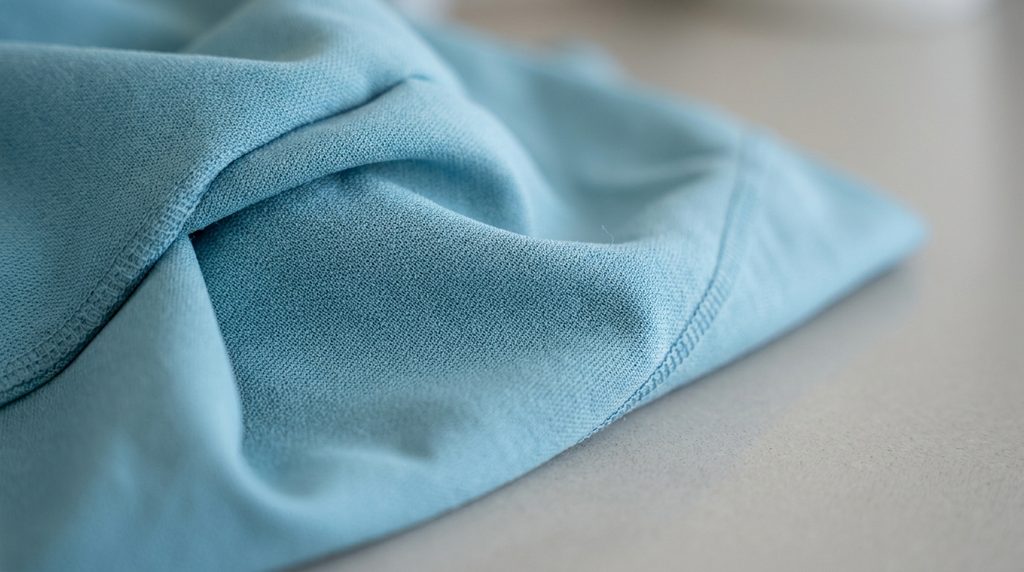
Breathable scrub fabrics may help with:
- Warm clinical rooms
- Fast-paced shifts
- Long walking periods
- Layering with underscrubs
- Wearing scrub jackets
- Dental and veterinary work
- Healthcare school rotations
- Busy outpatient clinics
- Workers who naturally run warm
Breathability should be balanced with coverage and durability. A fabric that is very thin may feel cool, but it may not provide enough structure or professional appearance.
Fabric Weight Changes How Scrubs Feel
Scrub fabric weight affects warmth, drape, structure, and comfort. A heavier fabric may feel more structured but warmer. A lighter fabric may feel cooler but may show wrinkles or pocket sag more easily.
Lightweight scrub fabrics
Lightweight scrubs can be useful for warm settings, active roles, and workers who prefer less bulk. They may feel easier to wear during long shifts, especially when layering is not needed.
Lightweight fabrics may work well for:
- Warm clinics
- Dental offices
- Veterinary teams
- Healthcare students
- Workers who move frequently
- Staff who prefer flexible clothing
- People who dislike heavy uniforms
Midweight scrub fabrics
Midweight fabrics often provide a balance of structure, comfort, and durability. Many healthcare workers prefer midweight scrubs because they feel professional without being too stiff or too thin.
Midweight fabrics may work well for:
- Nurses
- Medical assistants
- Physicians
- Clinic teams
- Group uniforms
- Long shifts
- Workers who need pocket support
Heavier scrub fabrics
Heavier fabrics may feel durable and structured, but they can feel warm or stiff during active shifts. They may be useful in cooler environments or for workers who prefer a more traditional scrub feel.
Workers should choose fabric weight based on role, temperature, layering habits, and movement needs.
Polyester Blends Are Common in Modern Scrubs
Polyester is common in medical scrubs because it can support durability, wrinkle resistance, color retention, and easy care. Many modern scrubs use polyester blended with rayon, spandex, cotton, or other fibers to improve softness and flexibility.
Polyester-blend scrubs may offer:
- Wrinkle resistance
- Color retention
- Smooth feel
- Durable structure
- Faster drying
- Easy care
- Shape retention
- Stretch when blended with spandex
However, not all polyester blends feel the same. Fabric construction, finishing, weave, and blend percentages can change softness, breathability, and drape.
Spandex Adds Stretch and Flexibility
Spandex is often added to scrub fabrics to improve stretch. Even a small amount can make scrubs feel more flexible during movement. Scrubs with spandex may be helpful for workers who bend, reach, sit, or move constantly.
Spandex can support:
- Flexible shoulders
- Easier hip movement
- Comfortable waistbands
- Better range of motion
- Modern athletic-inspired fit
- Less restriction during active tasks
The main point is balance. Too little stretch may feel stiff. Too much stretch without structure may feel clingy or loose over time. A good scrub fabric should stretch and recover.
Rayon Blends Can Improve Softness and Drape
Rayon is often used in scrub fabrics to create a softer feel and smoother drape. Rayon-blend scrubs may feel less stiff than traditional fabrics, making them appealing for long shifts.
Rayon blends may offer:
- Soft hand feel
- Smooth drape
- Comfortable movement
- Less rigid structure
- Professional appearance
- Better comfort against the skin
Care instructions should be checked carefully. Some rayon blends may need specific washing or drying habits to maintain shape, softness, and appearance.
Cotton-Rich Scrubs Can Feel Familiar
Cotton-rich scrub fabrics may feel breathable, familiar, and natural to some workers. Cotton can be comfortable, but it may wrinkle more, absorb moisture, and take longer to dry compared with some synthetic blends.
Cotton-rich scrubs may appeal to workers who prefer:
- Natural-feeling fabric
- Softer traditional texture
- Breathable comfort
- Less slick fabric feel
- Familiar workwear structure
However, healthcare workers should check whether the fabric wrinkles easily, shrinks after washing, or feels heavy during active shifts. Cotton-rich fabric can be comfortable, but it may not always provide the easiest care.
Performance Fabrics Support Active Workdays
Performance scrub fabrics are designed to support movement, easy care, and long-shift wear. These fabrics may include stretch fibers, moisture-management features, wrinkle resistance, and lightweight construction.
Performance scrub fabrics may help workers who need:
- Flexible movement
- Long-shift comfort
- Easy laundering
- Reduced wrinkling
- Breathability
- Modern fit
- Team uniform consistency
- Durable color
Performance fabric should still be judged by fit and comfort. A fabric can have strong features but still feel wrong if the cut, size, or waistband does not work for the wearer.
Moisture Comfort Matters During Busy Shifts
Healthcare workers may move between patient care, charting, supply rooms, lab areas, cleaning tasks, and front-desk responsibilities. Scrub fabric that feels damp, heavy, or sticky can become distracting.
Moisture comfort depends on:
- Fabric blend
- Weave
- Breathability
- Drying speed
- Layering
- Room temperature
- Shift activity
- Personal comfort preference
Moisture-wicking fabrics may help some workers feel more comfortable during busy or warm shifts. However, workers should still check softness, fit, and laundering behavior.
Wrinkle Resistance Helps Maintain Professional Appearance
Scrubs are washed frequently. Wrinkle-resistant fabric can help workers look more polished with less time spent ironing or steaming. This is especially helpful for people who rotate several scrub sets during the week.
Wrinkle resistance may be useful for:
- Nurses working long shifts
- Students preparing for clinical rotations
- Group uniforms
- Clinic staff with patient-facing roles
- Workers who pack scrubs in bags
- Staff who wash uniforms frequently
- Busy professionals with limited laundry time
Wrinkle-resistant scrubs should still be cared for according to the garment label. Drying temperature and storage habits can affect how smooth scrubs look.
Easy-Care Fabric Saves Time
Easy-care fabric is especially important for healthcare workers who need clean scrubs throughout the week. Scrubs should be practical to wash, dry, fold, and wear again without complicated care requirements.
Easy-care scrubs may offer:
- Machine-wash convenience
- Faster drying
- Reduced ironing
- Shape retention
- Color retention
- Wrinkle resistance
- Durable seams
- Fabric that resists excessive pilling
The CDC explains that Standard Precautions are used for all patient care and include common infection-prevention practices across healthcare settings. Scrub laundering should follow employer policy, facility requirements, and garment care labels.
Durability Matters for Frequent Washing
Scrubs may be washed more often than everyday clothing. Fabric durability matters because repeated washing can affect color, softness, stretch, seams, pockets, and waistband feel.
Before buying several sets, workers should consider:
- Fabric content
- Stitching quality
- Pocket reinforcement
- Waistband construction
- Colorfastness
- Shrinkage potential
- Pilling resistance
- Stretch recovery after washing
- Whether the fabric keeps shape
A scrub set may feel comfortable at first but perform poorly if it fades, pills, shrinks, or loses shape quickly.
Pocket Structure Depends on Fabric
Fabric affects how pockets perform. A very soft or lightweight fabric may feel comfortable but sag when pockets are filled. A more structured fabric may support tools better but feel less flexible.
Healthcare workers may carry:
- Pens
- Badge reel
- Phone
- Small notebook
- Gloves
- Alcohol pads
- Tape
- Scissors
- Penlight
- Keys
- Stethoscope accessories
- Small clinical tools
Workers who rely heavily on pockets should check whether the fabric supports weight without pulling, sagging, or distorting the garment.
Scrub Tops Need Different Fabric Priorities Than Pants
Scrub tops and scrub pants do not always need the same fabric behavior. Tops need shoulder mobility, neckline stability, pocket support, and breathable comfort. Pants need waistband comfort, hip movement, knee flexibility, inseam stability, and pocket structure.
Fabric priorities for scrub tops
Scrub tops should support:
- Shoulder movement
- Chest and upper-back comfort
- Neckline stability
- Pocket use
- Breathability
- Smooth layering
- Professional drape
Fabric priorities for scrub pants
Scrub pants should support:
- Waistband comfort
- Hip and thigh movement
- Knee flexibility
- Seat coverage
- Pocket support
- Length stability
- Stretch recovery
A worker may prefer one fabric blend for tops and another for pants depending on role and body type.
Scrub Fabric Should Match the Work Setting
Different work settings can create different fabric needs. A hospital shift, dental office, veterinary clinic, med spa, outpatient clinic, and school rotation may not require the same fabric performance.
Hospital and long-shift settings
Workers may need stretch, breathability, pocket support, durability, and easy care.
Dental settings
Dental professionals may need seated comfort, shoulder flexibility, smooth layering, and fabric that does not feel bulky.
Veterinary settings
Veterinary workers may need durable fabric, easy care, stretch, and materials that do not trap lint or hair heavily.
Outpatient clinics
Clinic teams may need professional appearance, team color consistency, comfort, and wrinkle resistance.
Healthcare students
Students may need budget-conscious, school-approved scrubs that are easy to wash and comfortable for labs and rotations.
Long Shifts Require Fabric That Moves
NIOSH has discussed how prolonged standing at work can contribute to fatigue, leg discomfort, swelling, and low back discomfort. Scrub fabric cannot solve these workplace issues by itself, but comfortable, flexible, breathable workwear can help reduce avoidable uniform-related irritation during demanding shifts. More context is available from NIOSH’s resource on prolonged standing at work.
For long shifts, fabric should support:
- Walking
- Standing
- Sitting
- Bending
- Reaching
- Layering
- Pocket use
- Temperature changes
- Repeated washing
- Professional appearance
The best long-shift scrub fabric should not become the thing a worker notices all day.
Fabric and Fit Work Together
Fabric alone does not create comfort. Fit is just as important. A breathable fabric may still feel uncomfortable if the scrub top is too tight. A stretch fabric may still perform poorly if the pants are too long or the waistband rolls. A durable fabric may still be distracting if the cut restricts movement.
Healthcare workers should evaluate:
- Fabric content
- Size chart
- Fit type
- Top length
- Pant rise
- Inseam
- Shoulder room
- Hip and thigh room
- Waistband style
- Pocket placement
- Layering needs
Fabric and fit should be reviewed together before buying multiple sets.
Layering Changes Fabric Needs
Underscrubs, scrub jackets, and lab coats can change how fabric feels. A fabric that feels breathable alone may feel too warm when layered. A fabric that feels structured alone may feel stiff under a jacket.
Healthcare workers should consider:
- Whether underscrubs are worn
- Whether jackets are used
- Whether lab coats are required
- Whether the workplace is cool or warm
- Whether sleeves need to layer smoothly
- Whether the fabric feels bulky
- Whether the full outfit supports movement
Layering should improve comfort without making the uniform restrictive.
Group Uniforms Need Practical Fabric Choices
Healthcare teams often need scrubs that look consistent while supporting many body types, roles, and shift needs. Fabric choice matters because a team uniform must work for nurses, front-desk clinical staff, assistants, providers, and sometimes students or trainees.
Group buyers should consider:
- Fabric comfort across roles
- Stretch for movement
- Breathability for long shifts
- Wrinkle resistance
- Color consistency
- Size range
- Men’s and women’s fit options
- Petite, tall, or short lengths
- Embroidery compatibility
- Reorder availability
- Easy-care laundering
- Staff feedback before full ordering
A good team uniform fabric should be easy to wear, easy to maintain, and practical for repeated reorders.
How to Test Scrub Fabric Before Buying Several Sets
Testing one set before buying several can prevent expensive mistakes. A scrub set should be judged after movement and laundering, not only during a quick try-on.
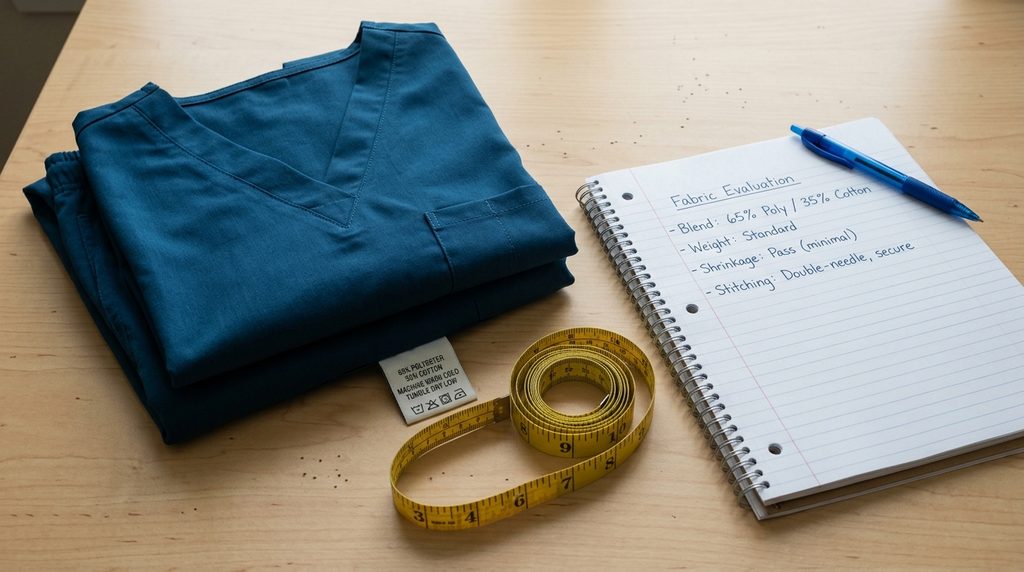
A good test includes:
- Reaching forward
- Raising arms slightly
- Sitting and standing
- Walking
- Bending
- Checking pocket sag
- Wearing normal work shoes
- Layering with underscrubs or jackets
- Washing according to instructions
- Checking stretch recovery
- Checking wrinkles after drying
- Checking color and shape after laundering
Once a worker knows the fabric performs well, buying additional sets becomes easier.
Fabric Red Flags to Watch For
Some scrub fabrics may feel fine at first but become frustrating during regular wear. Common red flags include:
- Fabric feels stiff when reaching
- Top pulls across the shoulders
- Pants bag at the knees quickly
- Fabric feels hot after movement
- Pockets sag when filled
- Waistband stretches out
- Fabric wrinkles heavily
- Scrubs shrink after washing
- Fabric pills quickly
- Color fades early
- Fabric feels scratchy against skin
- Scrubs lose shape after drying
A good scrub fabric should stay comfortable and professional through repeated wear and washing.
Scrub Fabric Checklist for Long Shifts
Before buying scrubs for long shifts, healthcare workers should confirm:
- Fabric blend
- Stretch level
- Stretch recovery
- Breathability
- Moisture comfort
- Fabric weight
- Softness
- Wrinkle resistance
- Easy-care instructions
- Pilling resistance
- Pocket structure
- Waistband performance
- Fit after washing
- Layering comfort
- Workplace-approved color
- Return or exchange policy
Scrub fabric should support the full workday, not just the first hour.
Common Mistakes When Choosing Scrub Fabrics
Choosing softness only
Soft fabric is important, but it should also provide structure, durability, stretch recovery, and pocket support.
Ignoring fabric weight
A fabric that is too heavy may feel warm. A fabric that is too thin may lack structure or pocket support.
Buying stretch fabric without checking recovery
Stretch is useful only if the fabric returns to shape after movement.
Forgetting laundering needs
Scrubs should be easy to wash and practical for weekly rotation.
Choosing fabric without considering the role
A veterinary worker, dental assistant, nurse, physician, and student may need different fabric features.
Buying several sets before testing one
Trying one set through a shift and wash cycle can help confirm comfort, fit, and fabric behavior.
Final Checklist Before Buying Scrubs by Fabric
Before choosing scrubs, healthcare workers should ask:
- Does the fabric stretch comfortably?
- Does it recover after movement?
- Does it feel breathable?
- Does it feel too warm when layered?
- Does it support pockets?
- Does it resist wrinkles?
- Does it wash easily?
- Does it hold color?
- Does it feel soft enough for long shifts?
- Does it support the role and workplace setting?
- Does it meet dress code requirements?
- Does it work with the preferred fit and inseam?
The best scrub fabric should support movement, comfort, care, and professional appearance throughout the workweek. Long-shift scrubs should feel dependable from the first patient interaction to the end of the day.
FAQs
What scrub fabric is best for long shifts?
The best scrub fabric for long shifts usually combines stretch, breathability, softness, durability, and easy care. Polyester-spandex blends, rayon blends, and performance fabrics are common options because they can support movement, wrinkle resistance, and repeated washing.
Are stretch scrubs better for healthcare workers?
Stretch scrubs can be helpful for healthcare workers who bend, reach, sit, walk, and move frequently. Stretch should also recover well so the fabric does not bag at the knees, sag at pockets, or lose shape after several hours of wear.
Are breathable scrubs important for nurses?
Breathable scrubs can be important for nurses and other healthcare workers who move through warm rooms, long shifts, and active tasks. Breathability can help reduce heat buildup, especially when workers wear underscrubs, jackets, or lab coats.
Do cotton scrubs or polyester scrubs last longer?
Durability depends on fabric construction, blend, care, and use. Polyester blends often support wrinkle resistance, color retention, and easy care. Cotton-rich fabrics may feel natural and breathable but can wrinkle more and may require more careful laundering.
How should healthcare workers test scrub fabric before buying more?
Healthcare workers should try one set first, move in it, test pockets, wear it with normal shoes and layers, then wash it according to instructions. After laundering, they should check fit, softness, wrinkles, stretch recovery, color, and shape.