

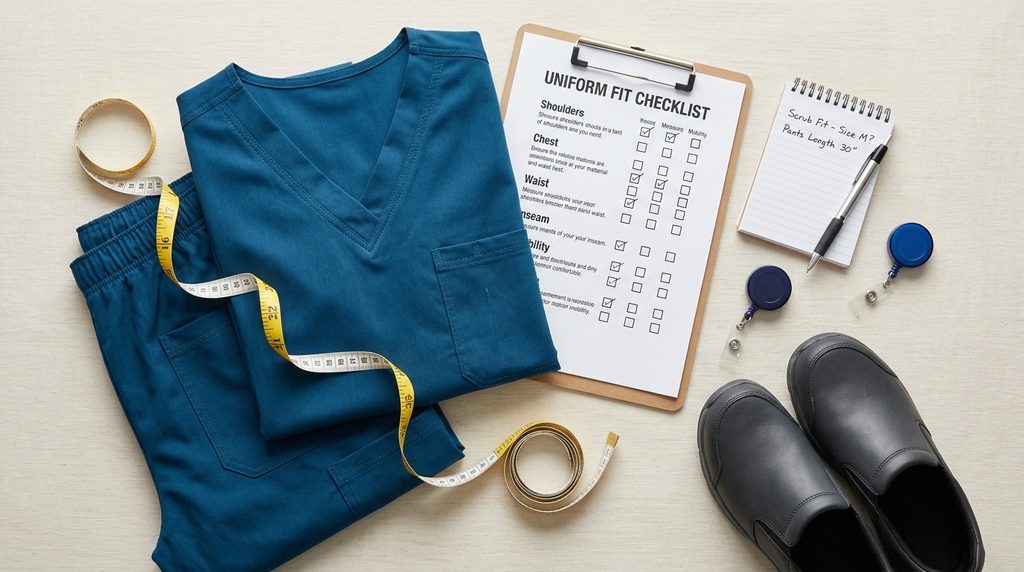
Scrub fit affects comfort, movement, and professional appearance throughout the healthcare workday. The right fit should support the worker’s body type, height, role, movement needs, and workplace dress code without pulling, dragging, bunching, sagging, or feeling restrictive during long shifts.
A practical scrub fit guide should look at more than small, medium, or large sizing. Healthcare workers should evaluate shoulder fit, top length, rise, inseam, waistband comfort, pocket placement, leg shape, fabric stretch, and how the uniform feels while standing, sitting, walking, bending, and reaching.
Quick Answer
The best scrub fit depends on body proportions, height, movement needs, and preferred uniform style. Petite workers often need shorter inseams and better pocket placement. Tall workers often need added length and balanced rise. Jogger pants should fit securely at the ankle without pulling. Regular-length styles work best when the standard inseam lands correctly with work shoes.
Healthcare workers should choose scrubs by testing real work movements, not just checking the size label.
Why Scrub Fit Matters
Scrubs are worn through long shifts, repeated movement, and frequent laundering. A poor fit can become uncomfortable quickly. Tops that pull at the shoulders, pants that drag at the hem, waistbands that roll, and pockets that sit awkwardly can affect daily comfort and professional appearance.
The U.S. Bureau of Labor Statistics describes registered nurses as working in hospitals, physicians’ offices, home healthcare, nursing facilities, outpatient centers, and schools. These settings can involve walking, standing, bending, patient care, charting, and long periods of movement. The BLS overview of registered nurse work environments helps show why medical uniforms need to function during real work conditions.
A good scrub fit can help with:
- Easier walking and standing
- Better shoulder and arm movement
- Less pulling while reaching
- Cleaner pant length with work shoes
- More secure waistband comfort
- Better pocket access
- Improved professional appearance
- Less fabric bunching or dragging
- More comfortable layering with jackets or lab coats
- Better long-shift wearability
The goal is not to find the tightest or loosest fit. The goal is a balanced fit that supports movement and looks appropriate for the workplace.
Start With Body Proportions, Not Just Size
Scrub sizing can vary by brand, collection, cut, and fabric. A worker may wear one size in a relaxed scrub set and a different size in a slim, jogger, stretch, or unisex style. Height, inseam, torso length, shoulder width, hip shape, and personal fit preference all affect how scrubs feel.
Key Fit Areas to Check
Healthcare workers should evaluate:
- Shoulder width
- Chest and upper back room
- Sleeve opening
- Top length
- Side vents
- Waistband comfort
- Pant rise
- Hip and thigh room
- Knee movement
- Inseam length
- Jogger cuff placement
- Pocket position
- Fabric stretch and recovery
A size chart is useful, but it does not replace movement testing.
How Scrub Tops Should Fit
Scrub tops should allow upper-body movement without pulling, gaping, or looking oversized. A top should feel comfortable while reaching, bending, sitting, charting, and layering under a jacket or lab coat.
Shoulder Fit
Shoulder seams should sit naturally. If the seams pull inward, the top may be too small. If they fall too far down the arm, the top may look oversized or feel bulky.
Healthcare workers should test shoulder fit by:
- Reaching forward
- Raising both arms
- Turning the upper body
- Bending slightly
- Sitting and standing
- Wearing the top with scrub pants
- Layering under a jacket or lab coat
The top should move with the body without pulling across the upper back.
Chest and Torso Fit
The chest should have enough room for breathing and movement. The torso should fall cleanly without clinging or ballooning. A top that is too tight can restrict movement, while a top that is too loose can look unpolished.
Top Length
Top length affects coverage and proportion. A scrub top should provide enough coverage while bending or reaching, but it should not be so long that it bunches around the hips or overwhelms the scrub pants.
Petite workers may prefer shorter or more shaped tops. Tall workers may need longer tops for coverage. Workers wearing joggers may prefer a top length that balances the cuffed pant shape.
Sleeve Fit
Sleeves should allow arm movement without feeling tight. They should also avoid excessive fabric that gets in the way during tasks. Sleeve comfort matters for nurses, dental teams, veterinary staff, medical assistants, and anyone who reaches frequently during the day.
How Scrub Pants Should Fit
Scrub pants should feel secure at the waist, allow movement through the hips and knees, and land correctly with work shoes. Pant fit problems are common because inseam, rise, leg shape, and waistband design all work together.
Waistband Fit
The waistband should stay in place without rolling, digging, sliding, or twisting. A drawstring can help adjust fit, while elastic or knit waistbands may improve comfort.
Common waistband options include:
- Full elastic waistband
- Yoga waistband
- Knit waistband
- Drawstring waistband
- Elastic-and-drawstring combination
- Flat-front waistband
- Rib-knit waistband
- Belt-loop waistband
The best waistband depends on body shape, role, and movement needs.
Rise
Rise affects where pants sit on the waist and hips. A rise that is too low may shift during bending or sitting. A rise that is too high may feel bulky or restrictive.
A good rise should feel comfortable while:
- Sitting
- Walking
- Bending
- Reaching
- Climbing stairs
- Carrying items in pockets
- Wearing normal work shoes
Hip and Thigh Room
Scrub pants should allow movement without pulling through the hips or thighs. Slimmer styles, joggers, and tapered pants may need extra attention in this area.
Knee Movement
Healthcare workers bend, sit, walk, and climb stairs during the day. Pants should not pull at the knees or become baggy after movement. Fabric recovery matters here.
Inseam Length
Inseam affects how pants land with shoes. Regular inseams do not work for everyone. Petite, tall, regular, and short-length options can make the uniform look cleaner and feel more comfortable.
Petite Scrub Fit
Petite scrub fit is not only about shorter hems. A true petite fit may also affect rise, knee placement, pocket position, and overall proportion. Petite workers often experience problems when regular pants are simply too long or poorly balanced for shorter frames.
Workers looking for petite scrub pants should check whether the entire pant fits correctly, not just whether the hem can be shortened.
Common Petite Fit Issues
Petite healthcare workers may notice:
- Pants dragging at the floor
- Fabric bunching at the ankle
- Cargo pockets sitting too low
- Knee areas falling below the natural knee
- Tops looking too long
- Jogger cuffs stacking awkwardly
- Jackets feeling oversized
- Lab coat sleeves running too long
Petite Fit Tips
Petite workers should look for:
- Shorter inseams
- Balanced pant rise
- Proportional pocket placement
- Tops that do not overwhelm the torso
- Jackets with correct sleeve length
- Joggers with cuffs that land near the ankle
- Straight-leg pants that do not drag
- Fabric that drapes without adding bulk
Hemming regular pants may help with length, but it does not fix rise, pocket placement, knee placement, or leg proportion.
Tall Scrub Fit
Tall scrub fit is important for workers who find regular scrub pants too short or tops too limited in coverage. Tall workers may need added inseam length, better rise, longer sleeves, and balanced proportions.
When choosing tall scrub pants, healthcare workers should test the fit while standing, sitting, walking, and bending. Pants that look acceptable while standing may ride too high when sitting.
Common Tall Fit Issues
Tall healthcare workers may notice:
- Pants riding above the ankle
- Jogger cuffs pulling upward
- Tops feeling too short
- Sleeves ending too high
- Pants pulling at the knee
- Rise feeling too low
- Lab coats lacking sleeve or body length
- Scrub sets looking unintentionally cropped
Tall Fit Tips
Tall workers should look for:
- Extended inseams
- Enough rise for sitting and bending
- Tops with adequate body length
- Sleeves that reach comfortably
- Pants that work with actual work shoes
- Joggers with proper cuff placement
- Straight-leg pants that do not look cropped
- Fabric with stretch and recovery
Tall scrubs should not simply add length. They should feel proportional through the entire garment.
Regular Scrub Fit
Regular scrub sizing works best for workers whose height and body proportions fit standard inseams and standard top lengths. Regular fit does not mean universal fit. It should still be tested carefully.
When Regular Length Works Best
Regular-length scrubs may work well when:
- Pants do not drag or ride too high
- Tops provide enough coverage
- Waistbands sit securely
- Sleeve length feels correct
- Pocket placement feels natural
- Jogger cuffs land properly
- Straight-leg pants fall cleanly with shoes
Regular length is often the easiest to find, but workers should still test movement before buying multiple pieces.
When Regular Length May Not Work
Regular-length scrubs may not be ideal if:
- Pants bunch heavily at the ankle
- Pants expose too much ankle while seated
- Tops feel too long or too short
- Pockets sit awkwardly
- Joggers pull upward or stack at the cuff
- The uniform looks unbalanced
Petite, tall, or short options may create a better fit.
Short-Length Scrub Fit
Short-length scrub pants are useful when regular-length pants are too long, especially for men’s scrub pants. A shorter inseam can help reduce dragging, bunching, and extra fabric around the shoe.
Short-length pants may be helpful when:
- Regular pants drag near the floor
- Hems collect under the shoe
- Cargo pockets sit too low
- Jogger cuffs stack too much
- Straight-leg pants look oversized
- Pants feel bulky at the bottom
Short length should still be checked for rise, waistband comfort, pocket placement, and knee movement.
Jogger Scrub Fit
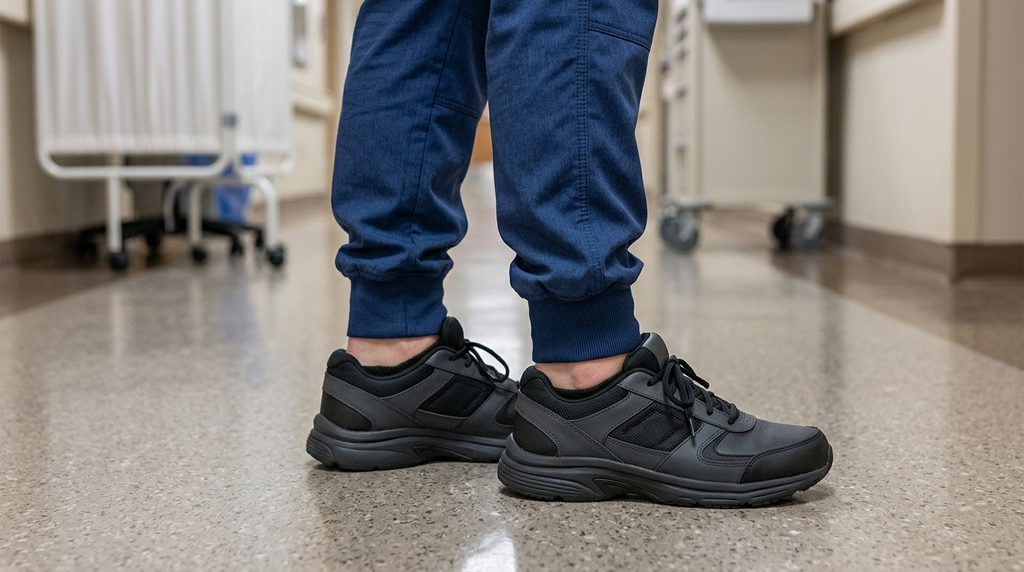
Jogger scrub pants have a cuffed ankle and tapered lower leg. They can create a clean, modern fit, but they should be chosen carefully. Joggers that are too short, too tight, or too narrow through the calf can become uncomfortable during active shifts.
How Joggers Should Fit
A good jogger scrub pant should:
- Sit securely at the waist
- Allow hip and thigh movement
- Bend comfortably at the knees
- Provide enough calf room
- Keep the cuff near the ankle
- Avoid pulling upward when sitting
- Work with supportive work shoes
- Meet workplace dress code rules
Joggers should look intentional, not like regular pants that are too short.
Jogger Fit by Body Type
Petite workers should check that the cuff does not stack too much fabric. Tall workers should check that the cuff does not ride too high. Workers with larger calves should check that the lower leg does not feel tight. Workers with long shifts should prioritize stretch and fabric recovery.
Relaxed, Modern, Slim, and Unisex Fits
Scrubs may be labeled relaxed, modern, slim, athletic, classic, or unisex. These labels affect how the garment fits through the body.
Relaxed Fit
Relaxed fit scrubs provide more room through the body. They may work well for workers who prefer looser movement or carry more items in pockets. However, too much extra fabric can look oversized.
Modern Fit
Modern fit scrubs usually have a cleaner shape without being overly tight. They often work well for workers who want a professional look with easier movement.
Slim Fit
Slim fit scrubs are more shaped through the body. They can look polished, but they should not restrict movement. Fabric stretch is especially important in slim styles.
Unisex Fit
Unisex scrubs are designed to fit a broader range of body types. They may feel boxier or less tailored for some workers. Sizing should be tested carefully, especially for shoulder width, top length, rise, and pant shape.
Fabric Stretch and Fit
Fabric has a major impact on fit. A non-stretch scrub may need more room, while stretch scrubs can feel more flexible. However, stretch should not replace proper sizing.
Stretch
Stretch helps scrubs move with the body during reaching, bending, walking, sitting, and lifting.
Recovery
Recovery means the fabric returns to shape after movement. Poor recovery can cause bagging at the knees, elbows, waistband, or seat.
Breathability
Breathable fabric can make scrubs more comfortable during active shifts or warmer work settings.
Structure
Structured fabric helps scrubs keep a professional appearance. A fabric that is too thin or clingy may not work well for every role.
The best fit usually comes from the right combination of size, cut, and fabric.
Fit by Healthcare Role
Different healthcare roles may require different fit priorities.
Nurses
Nurses often need scrubs that move well through the shoulders, waist, hips, and knees. Functional pockets, comfortable waistbands, and easy-care fabric are important.
Medical Assistants
Medical assistants may move between intake, exam rooms, supplies, and documentation. Scrubs should look polished while allowing frequent walking, sitting, and reaching.
Dental Teams
Dental workers may sit, lean, and reach for long periods. Comfortable tops, flexible shoulders, and pants that do not pull while seated are important.
Veterinary Staff
Veterinary workers may need scrubs that support bending, lifting, cleaning, and frequent movement. Durable fabric, secure pockets, and proper pant length are useful.
Doctors and Clinical Providers
Doctors, physician assistants, nurse practitioners, and other providers may prefer scrubs that look clean under lab coats or jackets. The BLS overview of physicians and surgeons shows how clinical providers work in professional healthcare settings where appearance and function both matter.
Healthcare Students
Students should follow school or clinical rotation rules first. Programs may specify color, fit, lab coat length, embroidery, or approved uniform styles.
Fit Testing Checklist
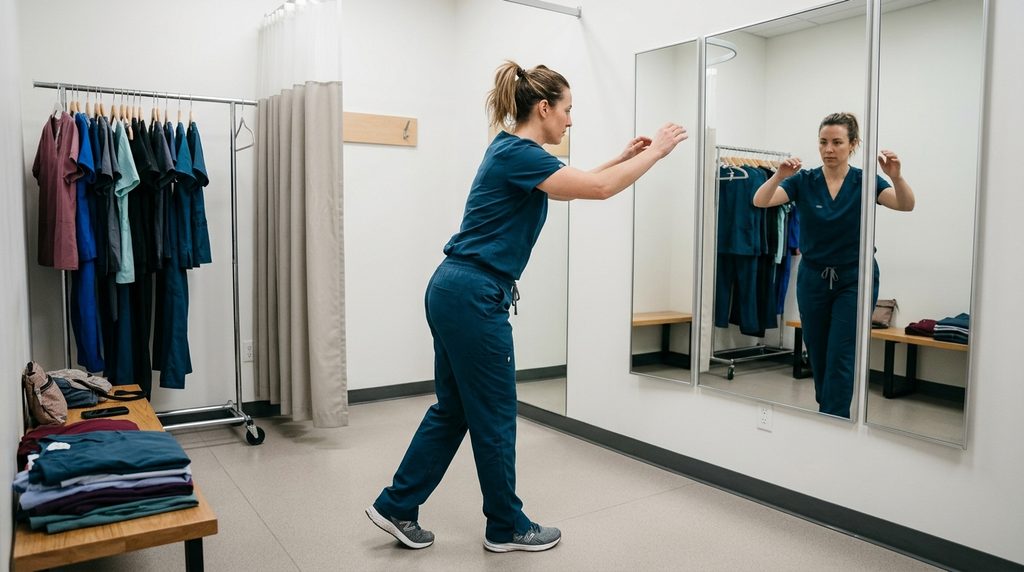
Scrubs should be tested through realistic movement. Standing in front of a mirror is not enough.
Before buying, check:
- Does the top pull across the shoulders?
- Does the top provide enough coverage?
- Does the neckline feel secure?
- Does the waistband stay in place?
- Does the rise feel comfortable while sitting?
- Do the pants pull at the knees?
- Does the inseam work with work shoes?
- Do pockets sit in useful positions?
- Does the fabric recover after movement?
- Does the style meet workplace rules?
- Does the uniform still feel comfortable when layered?
A scrub set should feel comfortable during the movements used in a normal workday.
Fit, Laundering, and Shrinkage
Scrub fit can change after washing if the fabric shrinks, loses shape, fades, or stretches out. Healthcare workers should review garment care instructions before buying multiple sets.
The CDC provides guidance on healthcare laundry and bedding, including cleaning considerations for healthcare textiles. Workers should follow employer policies, garment labels, and any infection-control rules that apply to their setting.
Before buying scrubs, check:
- Wash temperature instructions
- Drying recommendations
- Bleach restrictions
- Shrinkage risk
- Wrinkle resistance
- Color retention
- Fabric recovery
- Waistband durability
- Cuff stability
- Pocket and seam construction
A uniform that fits well before washing should continue to fit well after regular laundering.
Scrub Fit and Workplace Safety
Scrubs are professional workwear, but they are not replacements for required personal protective equipment. OSHA explains that personal protective equipment helps reduce exposure to workplace hazards that may cause injuries or illnesses.
Depending on the setting, healthcare workers may still need gloves, gowns, masks, eye protection, respirators, or other PPE. Scrub fit should support movement and comfort, while PPE should follow workplace safety requirements.
Buying Scrubs Online or Locally
Online shopping works well when the worker already knows the preferred size, fit, brand, and style. Local shopping is better when trying a new fit, checking inseam, testing waistband comfort, or comparing petite, tall, regular, short, jogger, tapered, and straight-leg options.
A verified West Chester medical scrub store listing can help local shoppers confirm store details and directions before visiting.
Local shopping can help with:
- Trying multiple fit options
- Comparing petite, regular, tall, and short lengths
- Testing jogger cuff placement
- Checking waistband comfort
- Matching tops and pants
- Reviewing pocket placement
- Trying jackets and lab coats
- Checking fabric stretch and recovery
Online ordering can help with:
- Reordering known sizes
- Browsing available lengths
- Comparing colors
- Shopping outside store hours
- Replacing worn pieces
- Building a consistent scrub wardrobe
A combined approach often works best. Try unfamiliar fit types locally, then reorder preferred styles online once sizing is confirmed.
Common Scrub Fit Mistakes
Many scrub fit problems happen when workers choose by size label alone.
Avoid these mistakes:
- Buying based only on small, medium, or large sizing
- Ignoring inseam length
- Choosing joggers without testing cuff placement
- Buying pants that drag or ride too high
- Overlooking rise while sitting
- Ignoring shoulder movement
- Choosing tops that are too long or too short
- Buying several sets before testing one
- Ignoring fabric recovery
- Skipping workplace dress code rules
- Forgetting laundering instructions
- Treating scrubs as a replacement for PPE
The best scrub fit should support the worker’s body, role, movement, and workplace expectations.
Final Thoughts
Scrub fit should be chosen by body type, height, role, movement needs, and workplace requirements. Petite workers may need shorter inseams and proportional pocket placement. Tall workers may need added length and better rise. Joggers need correct cuff placement. Regular and short-length options should be tested with real work shoes and real movement.
A well-fitted scrub set should feel comfortable through the shoulders, torso, waist, hips, knees, and ankles. Before buying multiple sets, healthcare workers should test movement, fabric recovery, layering, laundering requirements, and workplace rules. The right fit can make daily healthcare work feel more comfortable, professional, and practical.
FAQs
How should scrubs fit?
Scrubs should fit comfortably without pulling, sagging, dragging, or restricting movement. Tops should allow shoulder and torso movement, while pants should stay secure at the waist and move through the hips and knees. The full uniform should feel comfortable while standing, sitting, walking, bending, and reaching.
Should healthcare workers size up or down in scrubs?
Sizing up may help if scrubs pull across the shoulders, chest, hips, or knees. Sizing down may help if the uniform looks oversized or slides during movement. The best choice depends on cut, fabric stretch, body proportions, and workplace dress code rules.
What scrub fit is best for petite workers?
Petite workers often benefit from shorter inseams, balanced rise, proportional pocket placement, and tops that do not overwhelm the torso. True petite scrub pants may fit better than regular pants that are simply hemmed, especially when knee and pocket placement matter.
What scrub fit is best for tall workers?
Tall workers often need longer inseams, enough rise, proper sleeve length, and tops with adequate body coverage. Tall scrub pants should not ride too high when sitting, and jogger cuffs should land comfortably near the ankle.
Are jogger scrubs good for all body types?
Jogger scrubs can work for many body types when the waistband, calf room, cuff placement, and inseam fit correctly. Petite workers should avoid excess cuff stacking, tall workers should avoid cuffs that ride too high, and all workers should confirm that joggers meet workplace rules.